Religion and the Great Exhibition of 1851
0
0
As an Amazon Associate and affiliate partner, Menrva Books earns from qualifying purchases. Learn more
Author Description
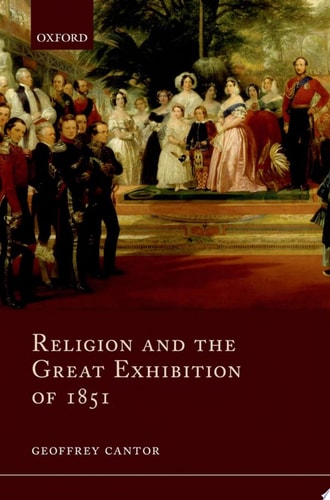
The Great Exhibition of 1851 is routinely portrayed as a manifestly secular event which was confined to celebrating the success of science, technology, and manufacturing in the mid-Victorian age. Geoffrey Cantor presents an innovative reappraisal of the Exhibition, demonstrating that it was widely understood by contemporaries to possess a religious dimension and that it generated controversy among religious groups.Prince Albert bestowed legitimacy on the Exhibition by proclaiming it to be a display of divine providence whilst others interpreted it as a sign of the coming Apocalypse. With anti-Catholic feeling running high following the recent 'papal aggression', many Protestants roundly condemned those exhibits associated with Catholicism and some even denounced the Exhibition as a Papist plot. Catholics, for their part, criticized the Exhibition as a further example of religious repression. Several evangelical religious organisations energetically rose to the occasion, considering the Exhibition to be a divinely ordained opportunity to make converts, especially among 'heathens' and foreigners. Jews generally welcomed the Exhibition, as did Unitarians, Quakers, Congregationalists, and a wide spectrum of Anglicans - but all for different reasons.Cantor explores this diversity of perception through contemporary sermons, and, most importantly, the highly differentiated religious press. Taken all together these religious responses to the Exhibition shed fresh light on a crucial mid-century event.
Menrva's Summary
THE THESIS
This book investigates the often-overlooked religious dimensions and controversies surrounding the Great Exhibition of 1851, challenging the conventional view that the event was a purely secular celebration of industry. Geoffrey Cantor, a historian of science and religion, utilizes a wide array of primary source materials to demonstrate how Victorian society interpreted the Crystal Palace through various theological lenses. By examining the intersection of faith and public spectacle, the author argues that the Exhibition served as a significant flashpoint for mid-Victorian religious identity and sectarian tension.
THE SCOPE MAP
What You Will Find
- Analysis of contemporary religious press and sermon archives from the mid-19th century.
- Examination of diverse denominational responses, including Anglicans, Catholics, Jews, and Quakers.
- Exploration of the political and religious climate surrounding the 'papal aggression' controversy.
- Documentation of evangelical missionary efforts aimed at foreign visitors during the event.
THE AUTHORITY PERSPECTIVE
Scholars recognize this work as a vital contribution to the study of Victorian cultural history, noting its success in complicating the narrative of secularization in the nineteenth century. The text is frequently cited for its meticulous use of primary sources to map the complex religious landscape of the era.
Page Count:
272
Publication Date:
2011-05-22
Publisher:
Oxford University Press
ISBN-10:
0199596670
ISBN-13:
9780199596676
Religion
History
Great Britain
Victorian History
19th Century
Cultural History