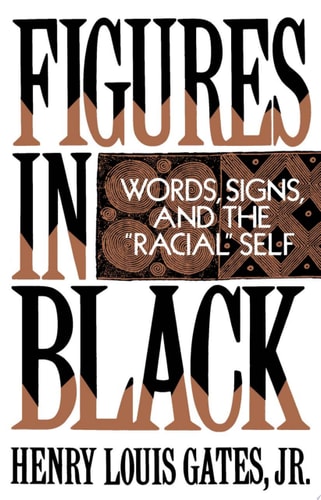
Figures in Black: Words, Signs, and the Racial Self
0
0
As an Amazon Associate and affiliate partner, Menrva Books earns from qualifying purchases. Learn more
Author Description
For over two centuries, critics and the black community have tended to approach African-American literature as simply one more front in the important war against racism, valuing slave narratives and twentieth-century works alike, primarily for their political impact. In this volume, Henry Louis Gates, Jr., a leading scholar in African-American studies, attacks the notion of African-American literature as a kind of social realism. Insisting, instead, that critics focus on the most repressed element of African-American criticism--the language of the text--Gates advocates the use of a close, methodical analysis of language, made possible by modern literary theory. Throughout his study, Gates incorporates the theoretical insights of critics such as Bakhtin, Foucault, Lacan, Derrida, and Bloom, as he examines the modes of representation that define black art and analyzes the unspoken assumptions made in judging this literature since its inception. Ranging from the eighteenth-century poet, Phillis Wheatley, to modern writers, Ishmael Reed and Alice Walker, Gates seeks to redefine literary criticism itself, moving away from a Eurocentric notion of a hierarchical canon--mostly white, Western, and male--to foster a truly comparative and pluralistic notion of literature.
Menrva's Summary
THE THESIS
This volume investigates whether African-American literature should be evaluated primarily through its political impact or through a rigorous, formal analysis of its internal linguistic structures. Henry Louis Gates, Jr., a prominent scholar in African-American studies, challenges the prevailing tendency to view black literature solely as a tool for social realism. By integrating modern literary theory with historical analysis, he argues for a shift toward close reading that accounts for the unique semiotic and rhetorical traditions within the black literary canon.
THE SCOPE MAP
What You Will Find
- A critical re-evaluation of the African-American literary canon from the eighteenth century to the modern era.
- Methodological applications of post-structuralist and formalist theories, including the works of Bakhtin, Foucault, and Derrida.
- Comparative analysis of authors ranging from Phillis Wheatley to Ishmael Reed and Alice Walker.
- A critique of Eurocentric hierarchies in traditional literary criticism and the promotion of a pluralistic framework.
THE AUTHORITY PERSPECTIVE
Scholars and critics recognize this work as a foundational text that shifted the trajectory of African-American literary studies toward formalist inquiry. Readers often note the high level of academic density, as the text assumes a working familiarity with continental philosophy and critical theory.
Page Count:
352
Publication Date:
1989-01-01
Publisher:
Oxford University Press
ISBN-10:
0199729174
ISBN-13:
9780199729173
History
Literary Criticism
Literary theory
Ethnic Studies
English
English & College Success
Community Tags
Similar Books