Body By Weimar
0
0
As an Amazon Associate and affiliate partner, Menrva Books earns from qualifying purchases. Learn more
Author Description
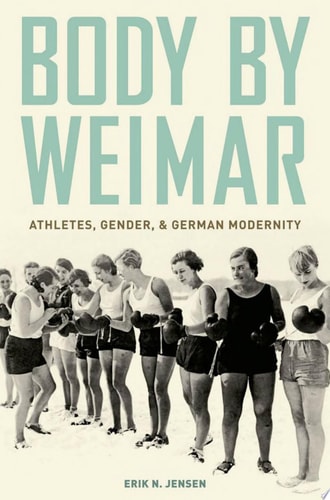
In Body by Weimar, Erik N. Jensen shows how German athletes reshaped gender roles in the turbulent decade after World War I and established the basis for a modern body and modern sensibility that remain with us to this day. The same cutting-edge techniques that engineers were using to increase the efficiency of factories and businesses in the 1920s aided athletes in boosting the productivity of their own flesh and bones. Sportswomen and men embodied modernity-quite literally-in its most streamlined, competitive, time-oriented form, and their own successes on the playing fields seemed to prove the value of economic rationalization to a skeptical public that often felt threatened by the process. Enthroned by the media as culture's trendsetters, champions in sports such as tennis, boxing, and track and field also provided models of sexual empowerment, social mobility, and self-determination. They showed their fans how to be modern, and, in the process, sparked heated debates over the aesthetics of the body, the limits of physical exertion, the obligations of citizens to the state, and the relationship between the sexes. If the images and debates in this book strike readers as familiar, it might well be because the ideal body of today-sleek, efficient, and equally available to men and women-received one of its earliest articulations in the fertile tumult of Germany's roaring twenties. After more than eighty years, we still want the Weimar body.
Menrva's Summary
THE THESIS
How did the athletic culture of the Weimar Republic redefine the physical body and gender roles in early twentieth-century Germany? Erik N. Jensen, a historian of modern Germany, examines the intersection of sports, economic rationalization, and social identity during the 1920s. He argues that athletes served as the primary conduits for modern sensibilities, using their bodies to model efficiency, self-determination, and new gender norms for a society grappling with the aftermath of World War I.
THE SCOPE MAP
What You Will Find
- Analysis of the 1920s Weimar Republic as a crucible for modern physical culture.
- Examination of how industrial efficiency techniques were applied to human athletic performance.
- Case studies of prominent sports figures in tennis, boxing, and track and field.
- Exploration of the media's role in establishing athletes as cultural trendsetters and symbols of social mobility.
THE AUTHORITY PERSPECTIVE
Scholars and historians frequently cite this work for its nuanced connection between economic rationalization and the evolution of the modern body. Readers often note the academic rigor of the text, which provides a foundational understanding of how Weimar-era sports culture continues to influence contemporary ideals of physical fitness.
Page Count:
200
Publication Date:
2010-01-01
Publisher:
Oxford University Press
ISBN-10:
019978048X
ISBN-13:
9780199780488
History
Gender Studies
Sports History
European History
Cultural History
Sociology
Community Tags
Similar Books