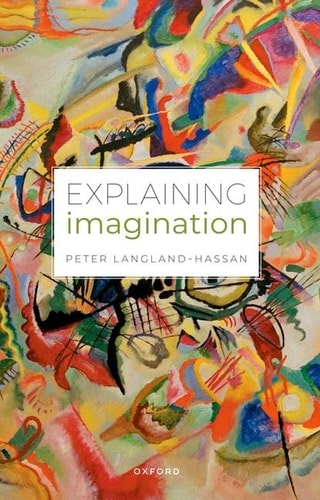
Explaining Imagination
0
0
As an Amazon Associate and affiliate partner, Menrva Books earns from qualifying purchases. Learn more
Author Description
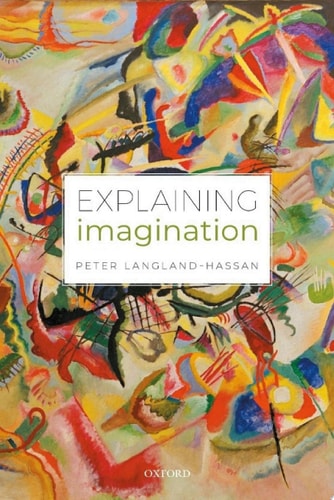
This is an open access title available under the terms of a CC BY-NC-ND 4.0 International licence. It is free to read at Oxford Academic and offered as a free PDF download from OUP and selected open access locations.Imagination will remain a mystery--we will not be able to explain imagination--until we can break it into parts we already understand. Explaining Imagination is a guidebook for doing just that, where the parts are other ordinary mental states like beliefs, desires, judgments, and decisions. In different combinations and contexts, these states constitute cases of imagining. This reductive approach to imagination is at direct odds with the current orthodoxy, according to which imagination is a sui generis mental state or process―one with its own inscrutable principles of operation. Explaining Imagination upends that view, showing how, on closer inspection, the imaginings at work in hypothetical reasoning, pretense, the enjoyment of fiction, and creativity are reducible to other familiar mental states―judgments, beliefs, desires, and decisions among them. Crisscrossing contemporary philosophy of mind, cognitive science, and aesthetics, Explaining Imagination argues that a clearer understanding of imagination is already well within reach.
Menrva's Summary
THE THESIS
Can imagination be fully explained by breaking it down into more familiar mental states like beliefs, desires, and judgments? Peter Langland-Hassan, a philosopher specializing in the philosophy of mind and cognitive science, challenges the prevailing view that imagination is a unique, irreducible process. By synthesizing research across philosophy, cognitive science, and aesthetics, he argues that imagination is a composite of ordinary mental states, thereby demystifying its operation and making it accessible to scientific and philosophical analysis.
THE SCOPE MAP
What You Will Find
- A reductive framework that decomposes imagination into beliefs, desires, judgments, and decisions.
- Critical analysis of the current philosophical orthodoxy regarding imagination as a sui generis process.
- Interdisciplinary evidence drawn from cognitive science, aesthetics, and contemporary philosophy of mind.
- Applications of the theory to specific domains including pretense, hypothetical reasoning, and the enjoyment of fiction.
THE AUTHORITY PERSPECTIVE
Experts and scholars in the philosophy of mind recognize this work as a significant challenge to the prevailing view of imagination as an inscrutable process. Readers frequently note the academic density of the prose, which serves as a rigorous, foundational text for those studying the intersection of cognitive science and aesthetics.
Page Count:
336
Publication Date:
2024-01-01
Publisher:
Oxford University Press
ISBN-10:
019890438X
ISBN-13:
9780198904380
Philosophy
Psychology
Politics
Cognitive
Aesthetics
Consciousness & Thought
Community Tags
Other Editions(2)
Similar Books