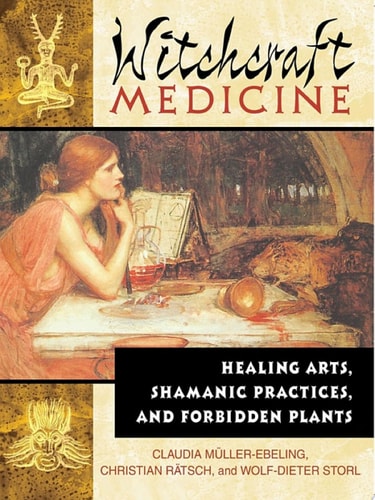
Witchcraft Medicine
0
0
As an Amazon Associate and affiliate partner, Menrva Books earns from qualifying purchases. Learn more
Author Description
An in-depth investigation of traditional European folk medicine and the healing arts of witches • Explores the outlawed “alternative” medicine of witches suppressed by the state and the Church and how these plants can be used today • Reveals that female shamanic medicine can be found in cultures all over the world • Illustrated with color and black-and-white art reproductions dating back to the 16th century Witch medicine is wild medicine. It does more than make one healthy, it creates lust and knowledge, ecstasy and mythological insight. In Witchcraft Medicine the authors take the reader on a journey that examines the women who mix the potions and become the healers; the legacy of Hecate; the demonization of nature’s healing powers and sensuousness; the sorceress as shaman; and the plants associated with witches and devils. They explore important seasonal festivals and the plants associated with them, such as wolf’s claw and calendula as herbs of the solstice and alder as an herb of the time of the dead--Samhain or Halloween. They also look at the history of forbidden medicine from the Inquisition to current drug laws, with an eye toward how the sacred plants of our forebears can be used once again.
Menrva's Summary
THE THESIS
This book investigates the suppressed healing arts of European witches and their connection to shamanic traditions worldwide. The authors explore the historical persecution of female healers by the Church and state, examining how outlawed plant-based medicines and sensuousness were demonized. It delves into the legacy of figures like Hecate, the role of the sorceress as shaman, and the specific plants associated with festivals and spiritual practices, arguing for the reintroduction of these ancient healing methods.
THE SCOPE MAP
- Exploration of traditional European folk medicine and the healing arts of witches.
- Analysis of the historical suppression of 'alternative' medicine by the state and Church.
- Connection between female shamanic medicine and global cultures.
- Examination of the legacy of Hecate and the sorceress as shaman.
- Identification of plants associated with witches, devils, seasonal festivals (solstice, Samhain), and specific spiritual meanings.
- Historical overview of forbidden medicine from the Inquisition to modern drug laws.
- Discussion on the potential for contemporary use of ancestral sacred plants.
- Inclusion of color and black-and-white art reproductions dating back to the 16th century.
THE AUTHORITY PERSPECTIVE
The book is presented as an in-depth investigation into a suppressed area of traditional medicine, highlighting the historical demonization of natural healing and sensuousness. It aims to reveal the enduring relevance of these practices and plants for contemporary use. The inclusion of historical art suggests a visually rich exploration of the subject matter. The authors' approach appears to bridge historical research with practical applications of herbalism and shamanic traditions.
Page Count:
272
Publication Date:
2003-10-01
Publisher:
Simon & Schuster
ISBN-10:
159477661X
ISBN-13:
9781594776618
Non-Fiction
History
Witchcraft
Herbalism
Folklore
Shamanism
Medicine
Cultural History
Community Tags
Similar Books