
The House of Truth
0
0
As an Amazon Associate and affiliate partner, Menrva Books earns from qualifying purchases. Learn more
Author Description
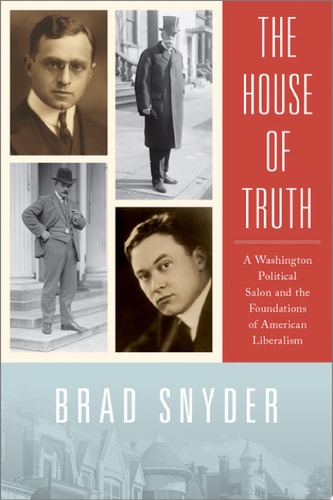
In 1912, A Group Of Ambitious Young Men, Including Future Supreme Court Justice Felix Frankfurter And Future Journalistic Giant Walter Lippmann, Became Disillusioned By The Sluggish Progress Of Change In The Taft Administration. The Individuals Started To Band Together Informally, Joined Initially By Their Enthusiasm For Theodore Roosevelt's Bull Moose Campaign. They Self-mockingly Called The 19th Street Row House In Which They Congregated The House Of Truth, Playing Off The Lively Dinner Discussions With Frequent Guest (and Neighbor) Oliver Wendell Holmes, Jr. About Life's Verities. Lippmann And Frankfurter Were House-mates, And Their Frequent Guests Included Not Merely Holmes But Louis Brandeis, Herbert Hoover, Herbert Croly - Founder Of The New Republic - And The Sculptor (and Sometime Klansman) Gutzon Borglum, Later The Creator Of The Mount Rushmore Monument. Weaving Together The Stories And Trajectories Of These Varied, Fascinating, Combative, And Sometimes Contradictory Figures, Brad Snyder Shows How Their Thinking About Government And Policy Shifted From A Firm Belief In Progressivism - The Belief That The Government Should Protect Its Workers And Regulate Monopolies - Into What We Call Liberalism - The Belief That Government Can Improve Citizens' Lives Without Abridging Their Civil Liberties And, Eventually, Civil Rights. Holmes Replaced Roosevelt In Their Affections And Aspirations. His Famous Dissents From 1919 Onward Showed How The Due Process Clause Could Protect Not Just Business But Equality Under The Law, Revealing How A Generally Conservative And Reactionary Supreme Court Might Embrace, Even Initiate, Political And Social Reform. Across The Years, From 1912 Until The Start Of The New Deal In 1933, The Remarkable Group Of Individuals Associated With The House Of Truth Debated The Future Of America. They Fought Over Sacco And Vanzetti's Innocence; The Dangers Of Communism; The Role The United States Should Play The World After World War One; And Though
Menrva's Summary
THE THESIS
How did a small circle of intellectuals and jurists in early 20th-century Washington transform the American political landscape from Progressivism to modern Liberalism? Brad Snyder, a legal historian and professor, examines the intellectual evolution of a group of influential figures who congregated at a row house in Washington, D.C. between 1912 and 1933. By analyzing their personal correspondence, legal writings, and political debates, Snyder argues that these individuals—including Felix Frankfurter, Walter Lippmann, and Oliver Wendell Holmes, Jr.—were instrumental in shifting the American government's role toward protecting civil liberties and promoting social equality.
THE SCOPE MAP
What You Will Find
- A detailed history of the intellectual circle known as the House of Truth.
- Analysis of the transition from Theodore Roosevelt-era Progressivism to New Deal-era Liberalism.
- Examination of the influence of Oliver Wendell Holmes, Jr. on the legal philosophy of his contemporaries.
- Documentation of debates regarding Sacco and Vanzetti, the role of the U.S. in global affairs, and the regulation of monopolies.
Scope Limits
- The narrative concludes at the start of the New Deal in 1933 and does not cover the later political careers of these figures in depth.
- The book focuses primarily on the intellectual and legal contributions of this specific group rather than a comprehensive history of the entire Taft or Wilson administrations.
THE AUTHORITY PERSPECTIVE
Historians and legal scholars frequently note the meticulous research and narrative depth Snyder brings to this study of early 20th-century American thought. Experts highlight the text as a significant contribution to understanding the origins of modern American liberalism and the evolution of Supreme Court jurisprudence.
Page Count:
688
Publication Date:
2017-01-01
Publisher:
Oxford University Press
ISBN-10:
0190261994
ISBN-13:
9780190261993
Biography
History
American History
Legal History
20th Century
Community Tags
Other Editions(2)
Similar Books


Reader Comments
Share Your Thoughts
No comments yet. Be the first to share your thoughts!