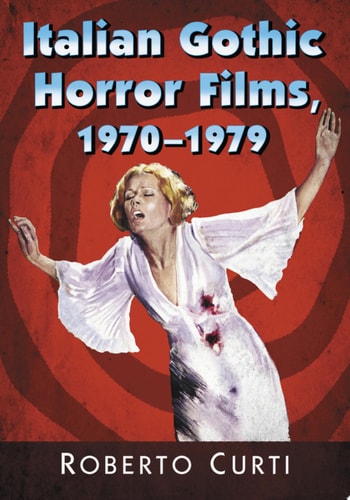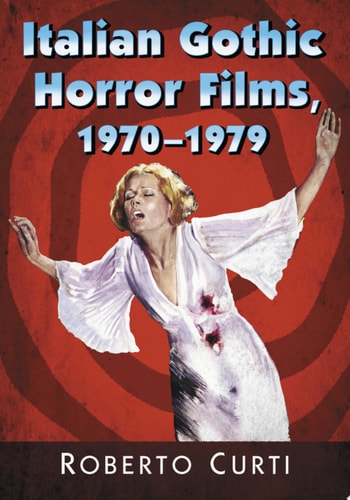
Italian Gothic Horror Films, 1970-1979
0
0
As an Amazon Associate and affiliate partner, Menrva Books earns from qualifying purchases. Learn more
Author Description
Italian Gothic horror films of the 1970s were influenced by the violent giallo movies and adults-only comics of the era, resulting in a graphic approach to the genre. Stories often featured over-the-top violence and nudity and pushed the limits of what could be shown on the screen. The decade marked the return of specialist directors like Mario Bava, Riccardo Freda and Antonio Margheriti, and the emergence of new talents such as Pupi Avati (The House with the Laughing Windows) and Francesco Barilli (The Perfume of the Lady in Black). The author examines the Italian Gothic horror of the period, providing previously unpublished details and production data taken from official papers, original scripts and interviews with filmmakers, scriptwriters and actors. Entries include complete cast and crew lists, plot summaries, production history and analysis. An appendix covers Italian made-for-TV films and mini-series.
Menrva's Summary
THE THESIS
This book investigates the evolution and characteristics of Italian Gothic horror films produced between 1970 and 1979. The author, Roberto Curti, draws upon extensive research, including official documents, original scripts, and interviews with key figures in the industry, to provide a comprehensive analysis of this specific cinematic period. The book examines how the genre was influenced by contemporary giallo films and adult comics, leading to a more graphic and boundary-pushing approach to storytelling. It highlights the contributions of both established directors like Mario Bava and emerging talents such as Pupi Avati, offering detailed production data and critical insights.
THE SCOPE MAP
- Detailed examination of Italian Gothic horror films from the 1970s.
- Analysis of influences from giallo films and adults-only comics.
- Focus on directors such as Mario Bava, Riccardo Freda, Antonio Margheriti, Pupi Avati, and Francesco Barilli.
- Inclusion of previously unpublished production details and data.
- Interviews with filmmakers, scriptwriters, and actors.
- Comprehensive cast and crew lists for featured films.
- In-depth plot summaries and critical analysis of key works.
- An appendix covering Italian made-for-TV films and mini-series from the era.
THE AUTHORITY PERSPECTIVE
The book offers a deep dive into a specific niche of Italian cinema, providing meticulous research and previously unpublished details. Its focus on the 1970s Gothic horror output, including its connections to giallo and comic art, suggests a text aimed at serious film scholars and dedicated genre enthusiasts. The inclusion of production data and interviews indicates a work that prioritizes factual accuracy and behind-the-scenes insight, likely appealing to those interested in the technical and historical aspects of filmmaking.
Page Count:
256
Publication Date:
2017-09-21
Publisher:
McFarland
ISBN-10:
1476664692
ISBN-13:
9781476664699
History
Horror
Non-Fiction
Art
Film Studies
Film History
Italian Cinema
Gothic