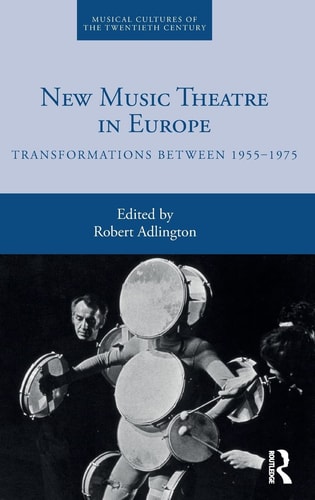
New Music Theatre in Europe: Transformations Between 1955-1975
0
0
As an Amazon Associate and affiliate partner, Menrva Books earns from qualifying purchases. Learn more
Author Description
Between 1955 and 1975 music theatre became a central preoccupation for European composers digesting the consequences of the revolutionary experiments in musical language that followed the end of the Second World War. The 'new music theatre' wrought multiple, significant transformations, serving as a crucible for the experimental rethinking of theatrical traditions, artistic genres, the conventions of performance, and the composer's relation to society. This volume brings together leading specialists from across Europe to offer a new appraisal of the genre. It is structured according to six themes that investigate: the relation of new music theatre to earlier and contemporaneous theories of drama; the use of new technologies; the relation of new music theatre to progressive politics; the role of new venues and environments; the advancement of new conceptions of the performer; and the challenges that new music theatre lays down for music analysis. Contributing authors address canonical works by composers such as Berio, Birtwistle, Henze, Kagel, Ligeti, Nono, and Zimmermann, but also expand the field to figures and artistic developments not regularly represented in existing music histories. Particular attention is given to new music theatre as a site of intense exchange - between practitioners of different art forms, across national borders, and with diverse mediating institutions.
Menrva's Summary
THE THESIS
The period between 1955 and 1975 witnessed a profound transformation in European music theatre, driven by composers grappling with post-war experimentalism. This volume explores how 'new music theatre' became a crucible for rethinking theatrical traditions, artistic genres, performance conventions, and the composer's societal role, bringing together leading specialists to offer a new appraisal of this genre.
THE SCOPE MAP
- The relationship between new music theatre and earlier/contemporaneous theories of drama.
- The utilization of new technologies in music theatre.
- The connection between new music theatre and progressive politics.
- The significance of new venues and performance environments.
- The evolution of new conceptions of the performer.
- The challenges new music theatre presents for music analysis.
- Examination of canonical works by composers such as Berio, Birtwistle, Henze, Kagel, Ligeti, Nono, and Zimmermann, alongside lesser-represented figures and developments.
THE AUTHORITY PERSPECTIVE
This volume is structured around six key themes that investigate the multifaceted nature of new music theatre during a pivotal two-decade period. It examines the genre's engagement with dramatic theory, technological innovation, political movements, evolving performance spaces, and the changing role of the performer. The collection also addresses the analytical challenges posed by these works and highlights the intense cross-disciplinary and cross-border exchanges that characterized this era of musical innovation.
Page Count:
331
Publication Date:
2019-01-01
Publisher:
Routledge
ISBN-10:
1138323012
ISBN-13:
9781138323018
History
Non-Fiction
Music History
Musicology
European History
Performance Studies
Cultural History
Community Tags
Similar Books