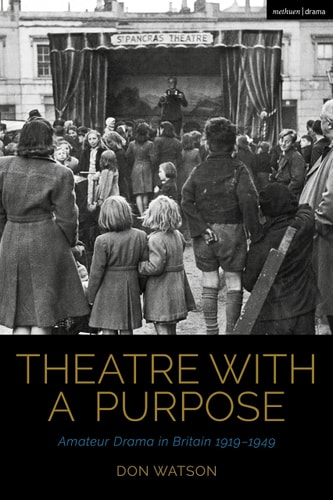
Theatre with a Purpose: Amateur Drama in Britain 1919-1949
0
0
As an Amazon Associate and affiliate partner, Menrva Books earns from qualifying purchases. Learn more
Author Description
This study of British amateur theatre in the inter-war period examines five different but interwoven examples of the belief, common in theatrical and educational circles at the time, that amateur drama had a purpose beyond recreation. Amateur theatre was at the height of its popularity as a cultural practice between the wars, so that by 1939 more British people had practical experience of putting on plays than at any time before or since. Providing an original account of the use of drama in adult education projects in deprived areas, and of amateur theatre in government-funded centres for the unemployed in the 1930s, it discusses repertoires, participation by working- class people and pioneering techniques of play-making. Amateur drama festivals and competitions were intended to raise standards and educate audiences. This book assesses their effect on play-making, and the use of innovative one-act plays to express contentious material, as well as looking at the Left Book Club Theatre Guild as an attempt to align the amateur theatre movement with anti-fascist and anti-war movements. A chapter on the Second World War rectifies the neglect of amateur theatre in war-time cultural studies, arguing that it was present and important in every aspect of war-time life. Don Watson builds on current scholarship and makes use of archival sources, local newspapers, unpublished scripts and the records of organizations not usually associated with the theatre. His work explores the range and diversity of amateur drama between the wars and the contributions it made to British theatre.
Menrva's Summary
THE THESIS
This book investigates the belief that amateur drama in Britain between 1919 and 1949 served a purpose beyond mere recreation. The study examines five distinct yet interconnected examples of this phenomenon, drawing on archival sources, local newspapers, unpublished scripts, and organizational records. It explores the use of drama in adult education for deprived areas, its role in government-funded centers for the unemployed during the 1930s, and the impact of festivals and competitions on play-making and audience education. The book also considers the use of innovative one-act plays for contentious material and the alignment of amateur theatre with anti-fascist movements through groups like the Left Book Club Theatre Guild, concluding with an analysis of amateur theatre's presence and importance during World War II.
THE SCOPE MAP
- Analysis of amateur theatre's role in adult education projects in deprived areas.
- Examination of amateur theatre in government-funded centers for the unemployed in the 1930s.
- Discussion of repertoires, working-class participation, and pioneering play-making techniques.
- Assessment of the effect of amateur drama festivals and competitions on play-making and audience education.
- Exploration of innovative one-act plays used to express contentious material.
- Case study of the Left Book Club Theatre Guild's alignment with anti-fascist and anti-war movements.
- An original account of amateur theatre's presence and importance during World War II.
THE AUTHORITY PERSPECTIVE
The book builds on current scholarship by utilizing a range of primary sources, including archival materials, local newspapers, and unpublished scripts. Its scope covers the diversity of amateur drama in Britain during the inter-war period and its contributions to the broader theatrical landscape. The work aims to rectify the neglect of wartime amateur theatre in cultural studies, arguing for its significant presence across all aspects of life during the conflict. By examining specific examples and innovative techniques, the study offers an original account of amateur theatre's multifaceted purpose.
Page Count:
211
Publication Date:
2025-08-07
Publisher:
Bloomsbury Academic
ISBN-10:
1350232084
ISBN-13:
9781350232082
History
Non-Fiction
Theatre History
Education
Social History
Cultural History
Community Tags
Similar Books