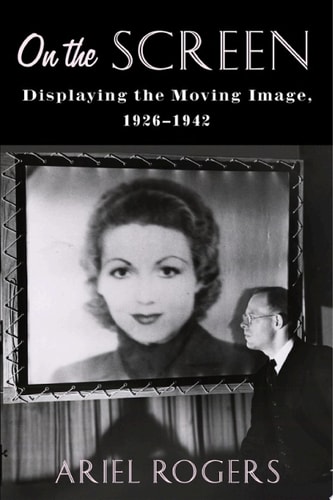
On the Screen Displaying the Moving Image, 1926–1942
0
0
As an Amazon Associate and affiliate partner, Menrva Books earns from qualifying purchases. Learn more
Author Description
Today, in a world of smartphones, tablets, and computers, screens are a pervasive part of daily life. Yet a multiplicity of screens has been integral to the media landscape since cinema's golden age. In On the Screen, Ariel Rogers rethinks the history of moving images by exploring how experiments with screen technologies in and around the 1930s changed the way films were produced, exhibited, and experienced. Marshalling extensive archival research, Rogers reveals the role screens played at the height of the era of "classical" Hollywood cinema. She shows how filmmakers, technicians, architects, and exhibitors employed a variety of screens within diverse spaces, including studio soundstages, theaters, homes, stores, and train stations. Far from inert, screens served as means of structuring mediated space and time, contributing to the transformations of modern culture. On the Screen demonstrates how particular approaches to the use of screens traversed production and exhibition, theatrical and extratheatrical practice, mainstream and avant-garde modes, and even cinema and television. Rogers's history challenges conventional narratives about the novelty of the twenty-first-century multiscreen environment, showing how attention to the variety of historical screen practices opens up new ways to understand contemporary media.
Menrva's Summary
THE THESIS
This book investigates how experiments with screen technologies between 1926 and 1942 fundamentally altered the production, exhibition, and experience of moving images. Ariel Rogers, drawing on extensive archival research, examines the pivotal role screens played during the height of classical Hollywood cinema. The book details how filmmakers, technicians, architects, and exhibitors utilized diverse screens across various spaces, from studio soundstages to theaters, homes, and train stations. These screens were not passive objects but active agents in structuring mediated space and time, contributing significantly to the transformations of modern culture.
THE SCOPE MAP
- Exploration of screen technologies and their impact on film production and exhibition from 1926-1942.
- Analysis of how screens shaped the cinematic experience in classical Hollywood.
- Case studies of screen usage in diverse spaces: studio soundstages, theaters, homes, stores, and train stations.
- Examination of the role of screens in structuring mediated space and time.
- Discussion of how screen practices traversed production and exhibition, theatrical and extratheatrical modes, and mainstream and avant-garde approaches.
- Connection between historical screen practices and contemporary media environments.
THE AUTHORITY PERSPECTIVE
The book is recognized for its innovative approach to film history, challenging conventional narratives by focusing on the materiality of screens rather than solely on content. It is lauded for its extensive archival research, which brings to light the multifaceted roles screens played in shaping cinematic production and reception during a critical period. The work is seen as essential for understanding the evolution of media environments and offers new perspectives on contemporary screen culture. Its interdisciplinary scope, bridging film studies, media history, and cultural studies, makes it a valuable contribution to the field.
Page Count:
288
Publication Date:
2019-07-30
Publisher:
Columbia University Press
ISBN-10:
0231548036
ISBN-13:
9780231548038
History
Non-Fiction
Technology
Cultural History
Media History
Film Studies
Community Tags
Similar Books