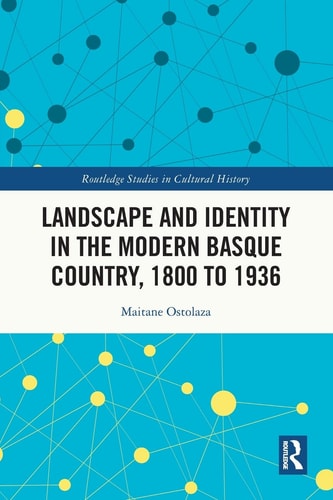
Landscape and Identity in the Modern Basque Country, 1800 to 1936
0
0
As an Amazon Associate and affiliate partner, Menrva Books earns from qualifying purchases. Learn more
Author Description
Landscape and Identity in the Modern Basque Country, 1800 to 1936 studies the relationship between landscape and modern identities in the Basque Country. Using an interdisciplinary approach that combines cultural history and geography, it analyses the process of historical construction of the Basque landscape, highlighting its multiple political, social and cultural meanings. The book is divided into two parts: the first examines the discourses, images and representations of the Basque landscape; the second examines landscape practices through tourism, hiking and mountaineering. Focusing on the Basque case but establishing numerous connections with comparable phenomena in Western Europe, the book demonstrates that the landscape became a structuring element insofar as it helped shape individual identities while participating in the creation of social links. This book examines the processes of identity construction "from below" by means of new interpretative tools, such as the experience of landscape. This work, originally published in French, brings to an English-speaking audience a crucial issue in the modern history of the Basque Country, namely the cultural construction of a collective identity within the framework of a nation-state, such as Spain, confronted with multiple territorial identities. Approaching this question from the perspective of landscape provides new keys to understanding the processes of nation-building that occurred in Europe in the nineteenth and twentieth centuries.
Menrva's Summary
THE THESIS
This book investigates the intricate relationship between the physical landscape and the formation of modern Basque identities between 1800 and 1936. It employs an interdisciplinary methodology, merging cultural history and geography, to analyze how the Basque landscape was historically constructed and imbued with political, social, and cultural significance. The work is structured into two parts: the first explores the discourses, imagery, and representations of the Basque landscape, while the second delves into landscape practices such as tourism, hiking, and mountaineering. By focusing on the Basque context but drawing parallels with Western Europe, the book argues that the landscape served as a crucial structuring element, shaping individual identities and fostering social cohesion.
THE SCOPE MAP
- Analysis of the historical construction of the Basque landscape.
- Examination of political, social, and cultural meanings attributed to the landscape.
- Exploration of discourses, images, and representations of the Basque landscape.
- Study of landscape practices including tourism, hiking, and mountaineering.
- Comparative analysis with similar phenomena in Western Europe.
- Focus on identity construction through landscape experience.
- Understanding of collective identity within the framework of a nation-state.
THE AUTHORITY PERSPECTIVE
This work brings a crucial issue in the modern history of the Basque Country to an English-speaking audience, focusing on the cultural construction of collective identity within Spain. Approaching this question from the perspective of landscape provides new keys to understanding the processes of nation-building that occurred in Europe in the nineteenth and twentieth centuries. The book demonstrates that the landscape became a structuring element insofar as it helped shape individual identities while participating in the creation of social links. It examines processes of identity construction "from below" by means of new interpretative tools, such as the experience of landscape.
Page Count:
218
Publication Date:
2023-01-01
Publisher:
Routledge
ISBN-10:
1032362189
ISBN-13:
9781032362182
Non-Fiction
History
Identity Studies
Nationalism
Cultural History
Sociology
Geography
European History
Community Tags
Similar Books