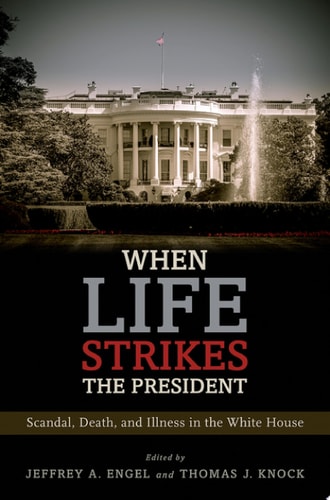
When Life Strikes the President: Scandal, Death, and Illness in the White House
0
0
As an Amazon Associate and affiliate partner, Menrva Books earns from qualifying purchases. Learn more
Author Description
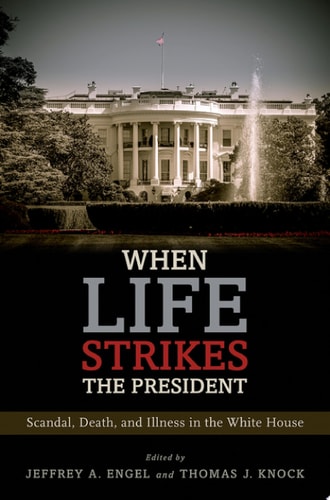
What happens when life, so to speak, strikes the President of the United States? How do presidents and their families cope with illness, personal loss, and scandal, and how have such personal crises affected a president's ability to lead, shaped presidential decision-making in critical moments, and perhaps even altered the course of events?In asking such questions, the essays in this volume -- written by twelve leading scholars noted for their expertise on their respective subjects -- reveal alternately the frailty, the humanity, and the strength of character of some of America's most controversial presidents. Three of them deal with the death of children--the impact of the loss of a young son on Franklin Pierce, Abraham Lincoln, and Calvin Coolidge. Another shows how, when his father suffered a stroke, John F. Kennedy lost his most important adviser as the crisis in Cuba loomed. Three essays tell stories about notorious, self-inflicted scandals during the presidencies of Andrew Jackson, Richard Nixon, and Bill Clinton. Several of them focus on the effects of disability or illness in the Oval Office -- on Woodrow Wilson's stroke at the end of World War I; Franklin Roosevelt's paralysis while leading the country through the Great Depression and World War II; Ronald Reagan's struggles and changed priorities in the wake of an assassination attempt; and the bearing of depression and personality disorders of one kind or another on the actions Jackson, John Tyler, Lyndon Johnson, and Richard Nixon during their crucial years in office.While illuminating a considerable span of American history and providing new and significant analyses of American politics and foreign policy, these fascinating essays remind us about the personal side of presidential leadership, and that tomorrow is promised to no one.
Menrva's Summary
THE THESIS
This volume investigates how personal crises—including illness, scandal, and bereavement—have influenced the decision-making processes and leadership capabilities of American presidents throughout history. Editors Jeffrey A. Engel and Thomas J. Knock curate a collection of essays from twelve prominent scholars to examine the intersection of private life and public duty. By analyzing specific historical episodes, the contributors argue that the human frailty of the executive branch is a constant, yet often overlooked, variable in the trajectory of national and foreign policy.
THE SCOPE MAP
What You Will Find
- Historical analysis of presidential responses to personal loss, such as the deaths of children under Pierce, Lincoln, and Coolidge.
- Examination of how physical and mental health issues, including strokes, paralysis, and depression, impacted leadership during crises.
- Case studies on the political fallout of self-inflicted scandals involving Jackson, Nixon, and Clinton.
Scope Limits
- The text does not provide a comprehensive biography of every president mentioned.
- It does not offer a clinical psychological diagnosis of the subjects, focusing instead on the political consequences of their personal states.
THE AUTHORITY PERSPECTIVE
Scholars and political historians frequently cite this work as a nuanced contribution to the study of the American presidency. Readers note that the essays provide a balanced look at how the human condition shapes the highest office in the land.
Page Count:
356
Publication Date:
2017-01-01
Publisher:
Oxford University Press
ISBN-10:
019065077X
ISBN-13:
9780190650773
Biography
History
American Government
American History
Community Tags
Other Editions(2)
Similar Books


Reader Comments
Share Your Thoughts
No comments yet. Be the first to share your thoughts!