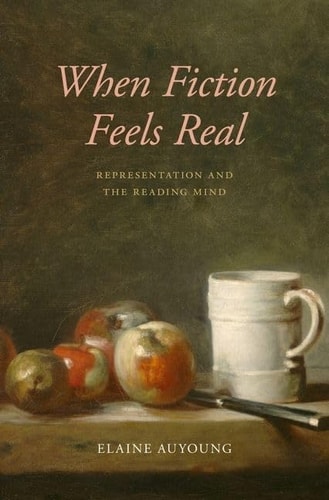
When Fiction Feels Real: Representation and the Reading Mind
0
0
As an Amazon Associate and affiliate partner, Menrva Books earns from qualifying purchases. Learn more
Author Description
Why do readers claim that fictional worlds feel real? How can certain literary characters seem capable of leading lives of their own, outside the stories in which they appear? What makes the experience of reading a novel uniquely pleasurable and what do readers lose when this experience comes to an end? Since their first publication, nineteenth-century realist novels like Pride and Prejudice and Anna Karenina have inspired readers to describe literary experience as gaining access to vibrant fictional worlds and becoming friends with fictional characters. While this effect continues to be central to the experience of reading realist fiction and later works in this tradition, the capacity for novels to evoke persons and places in a reader's mind has often been taken for granted and even dismissed as a naive phenomenon unworthy of critical attention.When Fiction Feels Real provides literary studies with new tools for thinking about the phenomenology of reading by bringing narrative techniques into conversation with psychological research on reading and cognition. Through close readings of classic novels by Jane Austen, Charles Dickens, George Eliot, and Leo Tolstoy, and the elegies of Thomas Hardy, Elaine Auyoung reveals what nineteenth-century writers know about how reading works. Building on well-established research on the mind, Auyoung exposes the underpinnings of the seemingly impossible achievement of realist fiction, introducing new perspectives on narrative theory, mimesis, and fictionality. When Fiction Feels Real changes the way we think about literary language, realist aesthetics, and the reading process, opening up a new field of inquiry centered on the relationship between fictional representation and comprehension.
Menrva's Summary
THE THESIS
This book investigates the cognitive mechanisms that allow readers to perceive fictional worlds and characters as authentic, tangible entities. Elaine Auyoung, a scholar of nineteenth-century literature, synthesizes narrative theory with contemporary psychological research on cognition. She argues that realist novelists intentionally employed specific linguistic techniques to trigger mental simulations, effectively bridging the gap between static text and the reader's internal experience of reality.
THE SCOPE MAP
What You Will Find
- Analysis of cognitive processes involved in mental simulation and character perception
- Examination of narrative techniques used by Austen, Dickens, Eliot, and Tolstoy
- Integration of psychological research on reading comprehension with literary aesthetics
Scope Limits
- The study focuses primarily on nineteenth-century realist fiction and does not extensively cover contemporary experimental or avant-garde literature
- The work prioritizes the phenomenology of the individual reader over sociological or historical reception studies
THE AUTHORITY PERSPECTIVE
Scholars in the field of cognitive literary studies identify this work as a significant contribution to understanding how narrative form influences mental representation. Readers frequently note the academic density of the prose, which is well-suited for researchers and students interested in the intersection of psychology and literary theory.
Page Count:
176
Publication Date:
2018-11-21
Publisher:
Oxford University Press
ISBN-10:
0190845473
ISBN-13:
9780190845476
Nineteenth century
Psychology of Reading
English
Literary Criticism
Fiction
Reading Psychology of
Narrative Theory
English & College Success
In literature
Community Tags
Similar Books