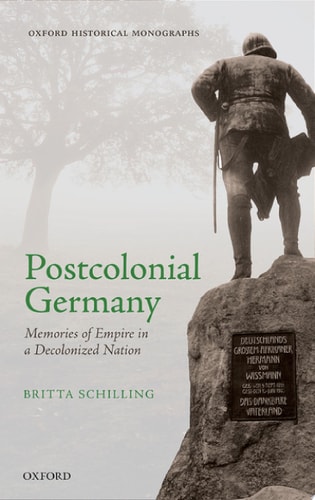
Postcolonial Germany: Memories of Empire in a Decolonized Nation
0
0
As an Amazon Associate and affiliate partner, Menrva Books earns from qualifying purchases. Learn more
Author Description
At the end of the First World War, Germany appeared to have lost everything: the lives of millions of soldiers and civilians, control over borderland territories, and, above all, a sense of national self-worth in the international political arena. But it also lost almost three million square kilometres of land overseas in the form of colonies and concessions in Africa, China, and the Pacific. Allied powers declared Germany unfit to rule over overseas populations, and it was forcibly decolonized. It thus became the first 'postcolonial' European nation that had participated in the 'new imperialism' of the modern era. The end of colonialism was the beginning of a memory culture that has been remarkably long-lived and dynamic. Postcolonial Germany traces the evolution of the collective memory of German colonialism, stretching from the loss of the colonies across the eras of National Socialism, national division, and the Cold War to the present day. It shows to what extent this memory was intimately bound to objects of material culture in the former colonial metropole, such as tropical fruit sold at colonial balls, state gifts handed to the former colonies at independence, and ethnological items kept as family heirlooms. The study draws on a wide range of sources, including popular literature, oral history, and previously unexplored archival holdings. It marks an important shift in historical methodology, considering the significance of both material culture and private memories in constructing accounts of the past. Above all, it raises important questions about the public responsibilities of postcolonial nations and governments in Europe and their relationship to the private legacies of colonialism.
Menrva's Summary
THE THESIS
This book investigates how the loss of overseas colonies after World War I shaped German national identity and memory culture throughout the twentieth century. Britta Schilling, a historian specializing in modern German history, utilizes a multidisciplinary approach to examine how the colonial past persisted in the German consciousness despite the nation's formal decolonization. She argues that the memory of empire was not merely a state-level political concern but was deeply embedded in the material culture and private lives of German citizens across shifting political regimes.
THE SCOPE MAP
What You Will Find
- Analysis of German colonial memory from the post-WWI era through the Cold War to the present.
- Examination of material culture, including ethnological heirlooms, state gifts, and colonial-themed consumer goods.
- Integration of diverse source materials such as popular literature, oral histories, and previously unexamined archival documents.
Scope Limits
- The study focuses primarily on the domestic German reception and memory of colonialism rather than the administrative history of the colonies themselves.
- It does not provide an exhaustive political history of the German colonial period prior to 1918.
THE AUTHORITY PERSPECTIVE
Scholars in the field of memory studies and German history recognize this work as a significant contribution to understanding the intersection of material culture and national identity. Readers frequently note the academic rigor of the research and the author's ability to synthesize private memory with broader historical narratives.
Page Count:
272
Publication Date:
2014-01-01
Publisher:
OUP Oxford
ISBN-10:
0191008451
ISBN-13:
9780191008450
History
Germany
Germany civilization
Memory Studies
Memory
Cultural History
European History
German history
Community Tags
Similar Books