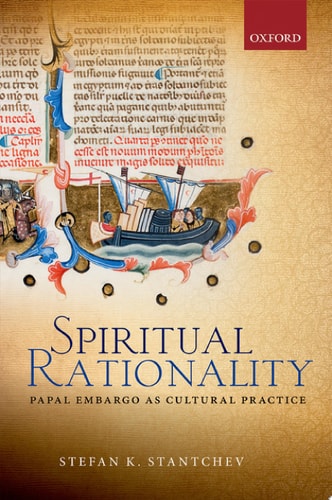
Spiritual Rationality: Papal Embargo as Cultural Practice
0
0
As an Amazon Associate and affiliate partner, Menrva Books earns from qualifying purchases. Learn more
Author Description
Spiritual Rationality: Papal Embargo as Cultural Practice offers the first book-length study of embargo in a pre-modern period and provides a unique exploration into the domestic implications of this tool of foreign policy. Based on a large and varied body of archival and printed, papal and secular sources, this inquiry covers Europe and the broader Mediterranean from c. 1150 to c. 1550. During this time of an increasing papal role within Christian society, the church employed restrictions on trade with Muslims, pagans, 'heretics', 'schismatics', disobedient Catholic communities and individual Jews in order to facilitate papally-endorsed warfare against external enemies and to discipline internal foes. Various trade bans were originally promulgated as individual responses to specific circumstances. These restrictions, however, were shaped by the premise that sin and the defense of the decorum of the faith and Christendom condoned, or even required, papal intervention into the lives of the laity and by the text-based approach of popes and canonists. Papal embargo, consequently, was not only the sum total of individual trade bans but also a legal and moral discourse that classified exchanges into legitimate and illegitimate ones, compelled merchants to distinguish clearly between themselves as (Roman) Christians and a multitude of others as non-Christians, and helped order symbolically both the relationships between the two groups and those between church and laity. Papal embargo's chief relevance thus lay within Christian society itself, where it functioned as an intangible pastoral staff. While sixteenth-century developments undermined it as a policy tool and a moral discourse alike, papal embargo inscribed the notion of the immorality of trade with the enemy into European thought.
Menrva's Summary
THE THESIS
How did the medieval papacy utilize trade embargoes as a mechanism for both foreign policy and internal moral discipline within Christian society? Stefan K. Stantchev, a scholar of medieval history, examines the intersection of canon law, economic restriction, and religious identity. He argues that papal embargoes functioned less as mere economic sanctions and more as a pastoral tool designed to define the boundaries of Christian identity and enforce moral order among the laity.
THE SCOPE MAP
What You Will Find
- Analysis of papal and secular archival sources from 1150 to 1550.
- Examination of trade restrictions targeting Muslims, pagans, heretics, and schismatics.
- A framework for understanding the legal and moral discourse surrounding legitimate versus illegitimate exchange.
Scope Limits
- The study focuses primarily on the Mediterranean and European context.
- It does not provide an exhaustive economic history of all medieval trade routes.
THE AUTHORITY PERSPECTIVE
Scholars recognize this work as a significant contribution to the study of medieval institutional power and the development of early modern economic thought. Readers frequently note the academic density of the prose and the author's meticulous use of primary source documentation to support his claims.
Page Count:
256
Publication Date:
2014-01-01
Publisher:
OUP Oxford
ISBN-10:
0191009237
ISBN-13:
9780191009235
History
Catholic Church
Canon law
Economic History
Commerce
Embargo
Religious History
European History
Community Tags
Other Editions(2)

Similar Books