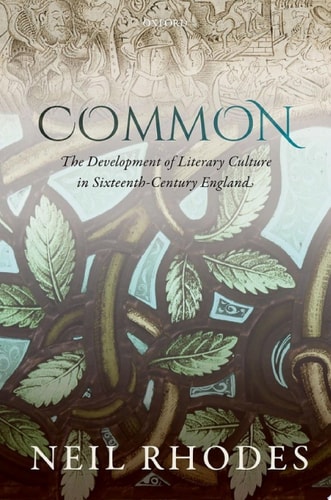
Common: The Development of Literary Culture in Sixteenth-Century England
0
0
As an Amazon Associate and affiliate partner, Menrva Books earns from qualifying purchases. Learn more
Author Description
This volume explores the development of literary culture in sixteenth-century England as a whole and seeks to explain the relationship between the Reformation and the literary renaissance of the Elizabethan period. Its central theme is the 'common' in its double sense of something shared and something base, and it argues that making common the work of God is at the heart of the English Reformation just as making common the literature of antiquity and of early modern Europe is at the heart of the English Renaissance. Its central question is 'why was the Renaissance in England so late?' That question is addressed in terms of the relationship between Humanism and Protestantism and the tensions between democracy and the imagination which persist throughout the century. Part One establishes a social dimension for literary culture in the period by exploring the associations of 'commonwealth' and related terms. It addresses the role of Greek in the period before and during the Reformation in disturbing the old binary of elite Latin and common English. It also argues that the Reformation principle of making common is coupled with a hostility towards fiction, which has the effect of closing down the humanist renaissance of the earlier decades. Part Two presents translation as the link between Reformation and Renaissance, and the final part discusses the Elizabethan literary renaissance and deals in turn with poetry, short prose fiction, and the drama written for the common stage.
Menrva's Summary
THE THESIS
This volume investigates the core question of why the English Renaissance occurred later than its continental counterparts by examining the intersection of Reformation theology and Humanist literary practice. Neil Rhodes, a scholar of early modern literature, utilizes historical analysis and linguistic inquiry to argue that the concept of the 'common'—functioning simultaneously as a term for shared experience and base status—serves as the primary catalyst for the cultural shifts of sixteenth-century England. The text posits that the Reformation's drive to make religious texts accessible to the public mirrored the Renaissance effort to translate classical works, creating a unique tension between democratic impulses and the literary imagination.
THE SCOPE MAP
What You Will Find
- Analysis of the socio-political associations of the term 'commonwealth' in sixteenth-century discourse.
- Examination of the role of Greek language studies in disrupting the traditional binary between elite Latin and vernacular English.
- A structural framework linking the Reformation's hostility toward fiction with the temporary decline of early Humanist activity.
- Discussion of translation as a bridge between religious reform and the Elizabethan literary explosion.
Scope Limits
- The study focuses primarily on the English context and does not provide a comparative analysis of contemporary developments in non-English speaking European nations.
- The text prioritizes the intersection of theology and literature, leaving aside broader economic or military history of the period.
THE AUTHORITY PERSPECTIVE
Scholars and students of early modern history frequently cite this work for its nuanced exploration of the linguistic and theological underpinnings of the English Renaissance. Readers often note the academic density of the prose, which requires a foundational understanding of sixteenth-century religious and political history to fully appreciate the author's arguments.
Page Count:
368
Publication Date:
2018-01-01
Publisher:
OUP Oxford
ISBN-10:
0191082147
ISBN-13:
9780191082146
History
Literary Criticism
English literature
Reformation History
Renaissance
English & College Success
English
Community Tags
Similar Books