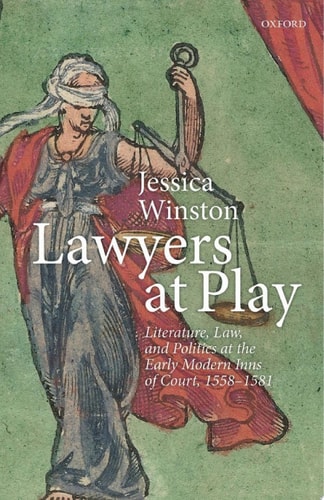
Lawyers at Play: Literature, Law, and Politics at the Early Modern Inns of Court, 1558-1581
0
0
As an Amazon Associate and affiliate partner, Menrva Books earns from qualifying purchases. Learn more
Author Description
Many early modern poets and playwrights were also members of the legal societies the Inns of Court, and these authors shaped the development of key genres of the English Renaissance, especially lyric poetry, dramatic tragedy, satire, and masque. But how did the Inns come to be literary centres in the first place, and why were they especially vibrant at particular times? Early modernists have long understood that urban setting and institutional environment were central to this phenomenon: in the vibrant world of London, educated men with time on their hands turned to literary pastimes for something to do. Lawyers at Play proposes an additional, more essential dynamic: the literary culture of the Inns intensified in decades of profound transformation in the legal profession. Focusing on the first decade of Elizabeth's reign, the period when a large literary network first developed around the societies, this study demonstrates that the literary surge at this time developed out of and responded to a period of rapid expansion in the legal profession and in the career prospects of members. Poetry, translation, and performance were recreational pastimes; however, these activities also defined and elevated the status of inns-of-court men as qualified, learned, and ethical participants in England's 'legal magistracy': those lawyers, judges, justices of the peace, civic office holders, town recorders, and gentleman landholders who managed and administered local and national governance of England. Lawyers at Play maps the literary terrain of a formative but understudied period in the English Renaissance, but it also provides the foundation for an argument that goes beyond the 1560s to provide a framework for understanding the connections between the literary and legal cultures of the Inns over the whole of the early modern period.
Menrva's Summary
THE THESIS
This study investigates how the transformation of the legal profession in early modern England catalyzed the development of a vibrant literary culture within the Inns of Court. Jessica Winston, a scholar specializing in early modern literature and culture, utilizes archival records and historical analysis to argue that literary pursuits were not merely idle pastimes. Instead, she posits that poetry, translation, and performance served as essential tools for defining the professional identity and social status of lawyers within the Elizabethan legal magistracy.
THE SCOPE MAP
What You Will Find
- Analysis of the literary output of the Inns of Court between 1558 and 1581.
- Examination of the intersection between legal career advancement and creative production.
- Case studies of specific poets and playwrights who were also legal practitioners.
Scope Limits
- The study focuses primarily on the first two decades of Elizabeth I's reign.
- It does not provide an exhaustive survey of all literary genres produced throughout the entire early modern period.
THE AUTHORITY PERSPECTIVE
Scholars recognize this work as a significant contribution to the understanding of institutional influences on Renaissance literature. Experts frequently highlight the text for its ability to bridge the gap between legal history and literary studies through rigorous archival research.
Page Count:
284
Publication Date:
2016-01-01
Publisher:
OUP Oxford
ISBN-10:
0191083941
ISBN-13:
9780191083945
History
Law history
English & College Success
Inns Of Court
English literature
Renaissance
Professional Career & Trade
English
Legal History
Literary Criticism
Community Tags
Similar Books