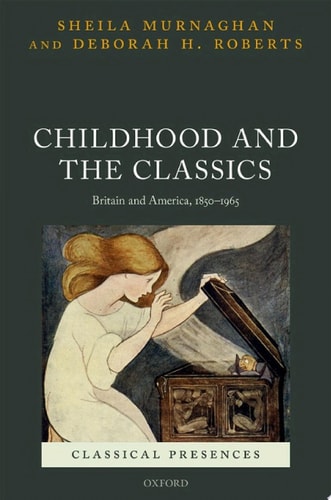
Childhood and the Classics: Britain and America, 1850-1965
0
0
As an Amazon Associate and affiliate partner, Menrva Books earns from qualifying purchases. Learn more
Author Description
The dissemination of classical material to children has long been a major form of popularization with far-reaching effects, although until very recently it has received almost no attention within the growing field of classical reception studies. This volume explores the ways in which children encountered the world of ancient Greece and Rome in Britain and the United States over a century-long period beginning in the 1850s, as well as adults' literary responses to their own childhood encounters with antiquity. Rather than discussing the role of classics in education, it focuses on books read for enjoyment, and on two genres of children's literature in particular: the myth collection and the historical novel. The tradition of myths retold as children's stories is traced in the work of writers and illustrators from Nathaniel Hawthorne and Charles Kingsley to Roger Lancelyn Green and Ingri and Edgar Parin D'Aulaire, while the discussion of historical fiction focuses particularly on the roles of nationality and gender in the construction of an ancient world for modern children. The book concludes with an investigation of the connections between childhood and antiquity made by writers for adults, including James Joyce, Virginia Woolf, and H.D. Recognition of the fundamental role in children's literature of adults' ideas about what children want or need is balanced throughout by attention to the ways in which child readers have made such works their own. The formative experiences of antiquity discussed throughout help to explain why despite growing uncertainty about the appeal of antiquity to modern children, the classical past remains perennially interesting and inspiring.
Menrva's Summary
THE THESIS
This volume investigates how classical antiquity was mediated and disseminated to children in Britain and the United States between 1850 and 1965. Authors Deborah H. Roberts and Sheila Murnaghan, both scholars of classical literature, analyze the cultural mechanisms through which ancient Greek and Roman narratives were adapted for young readers. They argue that these adaptations reflect adult projections of childhood needs while simultaneously shaping the literary landscape of the era. The study draws upon a wide range of primary texts, including myth collections and historical novels, to map the evolution of classical reception in the domestic sphere.
THE SCOPE MAP
What You Will Find
- Analysis of myth retellings by authors such as Nathaniel Hawthorne, Charles Kingsley, and the D'Aulaires.
- Examination of historical fiction as a vehicle for constructing national and gender identities.
- Investigation into the influence of childhood classical encounters on adult literary figures like James Joyce and Virginia Woolf.
Scope Limits
- The study explicitly excludes formal classroom education, focusing instead on literature read for leisure.
- The analysis is geographically restricted to Britain and the United States.
THE AUTHORITY PERSPECTIVE
Scholars recognize this work as a significant contribution to the field of classical reception studies, filling a notable gap regarding the role of children's literature. Readers frequently note the academic rigor of the prose and the depth of the historical research provided.
Page Count:
352
Publication Date:
2018-01-01
Publisher:
OUP Oxford
ISBN-10:
0191091952
ISBN-13:
9780191091957
Children's
History
Cultural History
English
English & College Success
Literary Criticism
New Used & Rental Textbooks
Community Tags
Similar Books