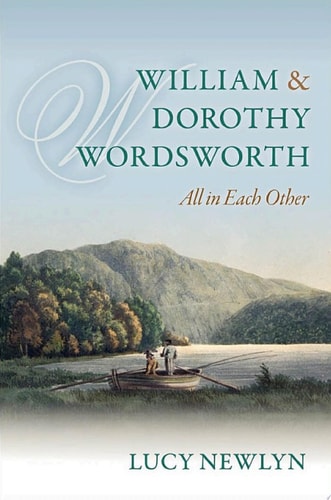
William and Dorothy Wordsworth: All in Each Other
0
0
As an Amazon Associate and affiliate partner, Menrva Books earns from qualifying purchases. Learn more
Author Description
William Wordsworth's creative collaboration with his 'beloved Sister' spanned nearly fifty years, from their first reunion in 1787 until her premature decline in 1835. Rumours of incest have surrounded the siblings since the 19th century, but Lucy Newlyn sees their cohabitation as an expression of deep emotional need, arising from circumstances peculiar to their family history. Born in Cockermouth and parted when Dorothy was six by the death of their mother, the siblings grew up separately and were only reunited four years after their father had died, leaving them destitute. How did their orphaned consciousness shape their understanding of each other? What part did traumatic memories of separation play in their longing for a home? How fully did their re-settlement in the Lake District recompense them for the loss of a shared childhood? Newlyn shows how William and Dorothy's writings -- closely intertwined with their regional affiliations -- were part of the lifelong work of jointly re-building their family and re-claiming their communal identity. Walking, talking, remembering, and grieving were as important to their companionship as writing; and at every stage of their adult lives they drew nourishment from their immediate surroundings. This is the first book to bring the full range of Dorothy's writings into the foreground alongside her brother's, and to give each sibling the same level of detailed attention. Newlyn explores the symbiotic nature of their creative processes through close reading of journals, letters and poems -- sometimes drawing on material that is in manuscript. She uncovers detailed interminglings in their work, approaching these as evidence of their deep affinity. The book offers a spirited rebuttal of the myth that the Romantic writer was a 'solitary genius', and that William Wordsworth was a poet of the 'egotistical sublime' -- arguing instead that he was a poet of community, 'carrying everywhere with him relationship and love'.
Menrva's Summary
THE THESIS
This work investigates the nature of the creative and emotional partnership between William and Dorothy Wordsworth, questioning how their shared history of childhood trauma and displacement shaped their literary output and communal identity. Lucy Newlyn, a scholar of Romantic literature, utilizes a combination of biographical analysis and close readings of journals, letters, and poetry to challenge the traditional view of the solitary Romantic genius. By foregrounding Dorothy's contributions alongside William's, Newlyn argues that their work was fundamentally a collaborative effort rooted in mutual emotional support and a shared sense of place.
THE SCOPE MAP
What You Will Find
- Analysis of the siblings' cohabitation from 1787 to 1835.
- Comparative study of Dorothy's journals and William's poetry.
- Examination of the impact of early parental loss on adult creative processes.
- Discussion of the Lake District as a site of communal identity formation.
Scope Limits
- The text does not provide a comprehensive biography of William Wordsworth outside of his relationship with Dorothy.
- It does not focus on the broader political landscape of the 19th century beyond its relevance to the siblings' immediate domestic sphere.
THE AUTHORITY PERSPECTIVE
Scholars and critics recognize this book as a significant intervention in Romantic studies for its balanced treatment of Dorothy Wordsworth's literary voice. Readers frequently note the academic rigor of the prose, which provides a detailed and nuanced perspective on the collaborative nature of the Wordsworths' creative lives.
Page Count:
399
Publication Date:
2013-01-01
Publisher:
OUP Oxford
ISBN-10:
0191504661
ISBN-13:
9780191504662
History
Biography
Biography Autobiography
Authorship
Romanticism
English & College Success
English
English literature
British literature
Literary Criticism
Community Tags
Similar Books