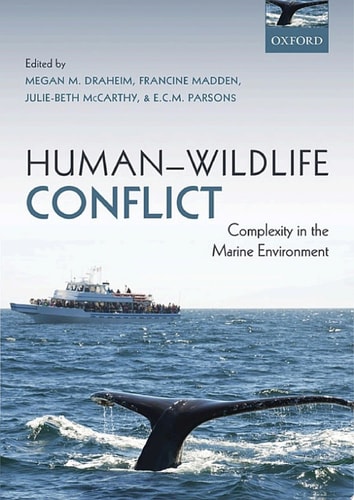
Human-Wildlife Conflict: Complexity in the Marine Environment
0
0
As an Amazon Associate and affiliate partner, Menrva Books earns from qualifying purchases. Learn more
Author Description
Human-wildlife conflict (HWC) has classically been defined as a situation where wildlife impacts humans negatively (physically, economically, or psychologically), and where humans likewise negatively impact wildlife. However, there is growing consensus that the conflict between people about wildlife is as important as the conflict between people and wildlife. HWC not only affects the conservation of one species in a particular geographic area, but also impacts the willingness of an individual, a community, and wider society to support conservation programs in general. This book explores the complexity inherent in these situations, covering the theory, principles, and practical applications of HWC work, making it accessible and usable for conservation practitioners, as well as of interest to researchers more concerned with a theoretical approach to the subject. Through a series of case studies, the book's authors and editors tackle a wide variety of subjects relating to conflict, from the challenges of wicked problems and common pool resources, to the roles that storytelling and religion can play in conflict. Throughout the book, the authors work with a Conservation Conflict Transformation (CCT) approach, adapted from the peacebuilding field to address the reality of conservation today. The authors utilise one of CCT's key analytic components, the Levels of Conflict model, as a tool to provide insight into their case studies. Although the examples discussed are from the world of marine conservation, the lessons they provide are applicable to a wide variety of global conservation issues, including those in the terrestrial realm. Human-Wildlife Conflict will be essential reading for graduate students and established researchers in the field of marine conservation biology. It will also be a valuable reference for a global audience of conservation practitioners, wildlife managers, and other conservation professionals.
Menrva's Summary
THE THESIS
This book investigates how the complexity of human-wildlife conflict extends beyond biological interactions to include the social and psychological conflicts between people regarding wildlife management. The authors, Francine Madden, Julie-Beth McCarthy, and Megan Draheim, utilize the Conservation Conflict Transformation (CCT) framework to analyze these issues. By applying the Levels of Conflict model, they argue that effective conservation requires addressing the underlying human dynamics rather than focusing solely on the wildlife species involved.
THE SCOPE MAP
What You Will Find
- Theoretical principles of Conservation Conflict Transformation (CCT)
- Application of the Levels of Conflict model to marine conservation
- Analysis of wicked problems and common pool resources
- Exploration of the influence of storytelling and religion on conservation outcomes
- Diverse case studies from marine environments
Scope Limits
- The text focuses primarily on marine conservation examples, though the authors note broader applicability.
- It does not provide a comprehensive guide to terrestrial wildlife management techniques.
THE AUTHORITY PERSPECTIVE
Experts recognize this work as a significant contribution to the field of conservation biology by bridging the gap between social science and environmental management. Readers frequently note the academic density of the prose, which serves as a rigorous resource for graduate students and professional practitioners.
Page Count:
224
Publication Date:
2015-01-01
Publisher:
OUP Oxford
ISBN-10:
0191510890
ISBN-13:
9780191510892
Nature
Science
Conservation
Marine Biology
Nature
Conflict Resolution
Community Tags
Similar Books

Reader Comments
Share Your Thoughts
No comments yet. Be the first to share your thoughts!