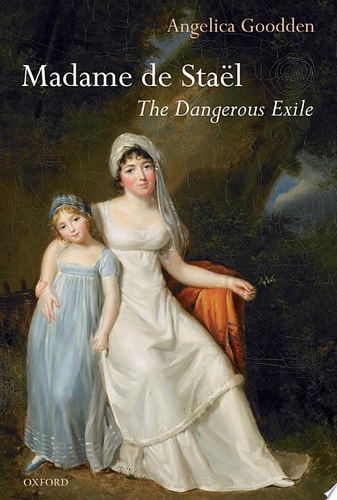
Madame de Staël: The Dangerous Exile
0
0
As an Amazon Associate and affiliate partner, Menrva Books earns from qualifying purchases. Learn more
Author Description
How Does Exile Beget Writing, And Writing Exile? What Kind Of Writing Can Both Be Fuelled By Absence And Prolong It? Exile, Which Was Meant To Imprison Her, Paradoxically Gave Madame De Staël A Freedom That Enabled Her To Be As Active A Dissident As Any Woman In The Late Eighteenth And Early Nineteenth Centuries Was Capable Of Being. Repeatedly Banished For Her Nonconformism, She Felt She Had Been Made To Suffer Twice Over, First For Political Daring And Then For Daring, As A Woman, To Be Political (a Particularly Grave Offence In The Eyes Of The Misogynist Napoleon). Yet Her Outspokenness - In Novels, Comparative Literary Studies, And Works Of Political And Social Theory - Made Her Seem As Much A Threat Outside Her Beloved France As Within It, While Her Friendship With Statesmen, Soldiers, And Literary Figures Such As Byron, Fanny Burney, Goethe, And Schiller Simply Added To Her Dangerous Celebrity. She Preached The Virtues Of Liberalism And Freedom Wherever She Went, Turning The Experiences Of Her Enforced Absence Into An Arsenal To Use Against All Who Tried To Suppress Her. Even Napoleon, Perhaps Her Greatest Foe, Conceded, From His Own Exile On St Helena That She Would Last. Her Unremitting Activity As A Speaker And Writer Made Her Into Precisely The Sort Of Activist No Woman At That Time Was Permitted To Be; Yet She Paradoxically Remained A Reluctant Feminist, Seeming Even To Connive At The Inferior Status Society Granted Her Sex At The Same Time As Vociferously Challenging It, And Remaining Torn By The Conflicting Demands Of Public And Private Life.
Menrva's Summary
THE THESIS
How does the state of political exile function as both a catalyst for intellectual production and a mechanism of social suppression for Germaine de Staël? Angelica A. Goodden, a scholar of French literature and culture, examines the life of Madame de Staël to argue that her forced displacement by Napoleon Bonaparte paradoxically provided the autonomy necessary to challenge the gendered and political constraints of her era. By analyzing her correspondence, novels, and political treatises, Goodden illustrates how Staël transformed her status as a pariah into a platform for liberal advocacy and intellectual defiance.
THE SCOPE MAP
What You Will Find
- An analysis of the intersection between 18th-century political theory and personal biography.
- A detailed account of Staël's interactions with prominent European figures including Byron, Goethe, and Schiller.
- An examination of the gendered dynamics of political dissent during the Napoleonic era.
Scope Limits
- The text does not provide a comprehensive history of the Napoleonic Wars, focusing instead on the specific impact of exile on Staël's personal and professional life.
THE AUTHORITY PERSPECTIVE
Scholars and historians recognize this work as a rigorous examination of the tension between private identity and public political activism in the early 19th century. Readers frequently note the academic depth of the prose, which effectively contextualizes Staël's complex relationship with both her contemporaries and the restrictive social norms of her time.
Page Count:
344
Publication Date:
2008-01-01
Publisher:
Ebsco Publishing
ISBN-10:
0191528773
ISBN-13:
9780191528774
History
Biography
Women authors
English
Literature
European History
Literary Criticism
English & College Success
Womens Studies
French Authors
Community Tags
Similar Books