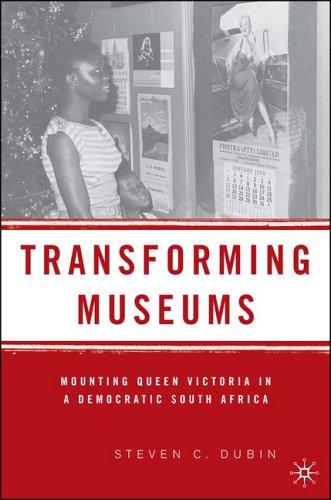
Transforming Museums
0
0
As an Amazon Associate and affiliate partner, Menrva Books earns from qualifying purchases. Learn more
Author Description
"South African society has been refashioned since the first open elections were held in 1994; if democracy is the theory then transformation is the practice. This is apparent in the nation's museums, where collection and exhibition policies, staffs and audiences have been changed in fundamental ways. Such changes have impacted the range of these institutions, including those focusing on art, natural history and science, cultural history, local events, and military matters. Steven C. Dubin examines the various strategies museums have adopted to shed their former ideological biases and become more inclusive."--Jacket.
Menrva's Summary
THE THESIS
This book examines the profound societal shifts within South African museums following the end of apartheid and the advent of democracy. Steven C. Dubin analyzes the strategies employed by various types of South African institutions—including art, natural history, science, cultural history, local, and military museums—to dismantle former ideological biases. The work details how collection policies, exhibition practices, staff demographics, and audience engagement have been fundamentally altered to foster greater inclusivity in the post-1994 era.
THE SCOPE MAP
- Analysis of transformation strategies in South African museums post-1994.
- Examination of changes in collection and exhibition policies.
- Impact of transformation on museum staff and audiences.
- Case studies across diverse museum types (art, natural history, science, cultural history, local, military).
- Exploration of how museums shed former ideological biases.
- Focus on the practice of transformation in a democratic South Africa.
THE AUTHORITY PERSPECTIVE
The book is regarded as a significant examination of institutional change in post-apartheid South Africa, focusing on the practical implementation of democracy within museums. It details the multifaceted strategies museums have adopted to become more inclusive, addressing shifts in collections, exhibitions, staffing, and audience engagement. The work is noted for its comprehensive scope, covering various types of institutions and their efforts to overcome past ideological constraints. This analysis provides insight into how cultural heritage sites reflect and shape broader societal transformations.
Page Count:
360
Publication Date:
2006-01-01
ISBN-10:
140397411X
ISBN-13:
9781403974112
Travel
Non-Fiction
History
Politics
Business
Cultural History
Museum Studies
South Africa
Sociology
Community Tags
Similar Books