Pentecostal Modernism
0
0
As an Amazon Associate and affiliate partner, Menrva Books earns from qualifying purchases. Learn more
Author Description
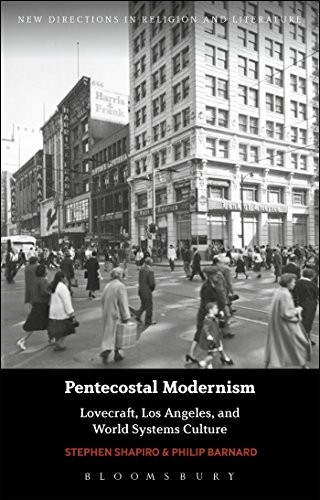
Bringing together new accounts of the pulp horror writings of H.P. Lovecraft and the rise of the popular early 20th-century religious movements of American Pentecostalism and Social Gospel, Pentecostal Modernism challenges traditional histories of modernism as a secular avant-garde movement based in capital cities such as London or Paris. Disrupting accounts that separate religion from progressive social movements and mass culture, Stephen Shapiro and Philip Barnard construct a new Modernism belonging to a history of regional cities, new urban areas powered by the hopes and frustrations of recently urbanized populations seeking a better life. In this way, Pentecostal Modernism shows how this process of urbanization generates new cultural practices including the invention of religious traditions and mass-cultural forms.--Bloomsbury Publishing.
Menrva's Summary
THE THESIS
Pentecostal Modernism challenges traditional narratives of modernism by centering its development in regional cities and exploring the intersection of religious movements with mass culture. Stephen Shapiro and Philip Barnard argue that modernism was not solely an urban avant-garde phenomenon confined to major capitals but also a product of the hopes and frustrations of populations in newly urbanized areas. The book examines how the processes of urbanization in the early 20th century fostered new cultural practices, including the invention of religious traditions and the creation of mass-cultural forms. It specifically analyzes the pulp horror writings of H.P. Lovecraft alongside the rise of American Pentecostalism and the Social Gospel movement to support this thesis.
THE SCOPE MAP
- Analysis of H.P. Lovecraft's pulp horror writings within the context of early 20th-century modernism.
- Exploration of the rise of American Pentecostalism and the Social Gospel movement.
- Re-evaluation of modernism's geographical and cultural centers, moving beyond traditional European capitals.
- Examination of the role of regional cities and newly urbanized populations in shaping modernist cultural practices.
- Discussion of how urbanization generated new religious traditions and mass-cultural forms.
- Disruption of the separation between religion, progressive social movements, and mass culture in modernist studies.
THE AUTHORITY PERSPECTIVE
The book is positioned as a significant contribution to modernist studies, aiming to broaden its geographical and thematic scope. By integrating religious movements and mass culture, it seeks to offer a more inclusive understanding of early 20th-century cultural production. The work challenges established historical narratives by focusing on regional urban centers and the experiences of their inhabitants. Its interdisciplinary approach, bridging literary criticism, religious studies, and urban history, suggests a text intended for scholars and students interested in the complex origins of modernism.
Page Count:
192
Publication Date:
2017-01-01
ISBN-10:
1474238734
ISBN-13:
9781474238731
Religion
Non-Fiction
History
Urban Studies
Literary Criticism
Cultural History
Community Tags
Similar Books