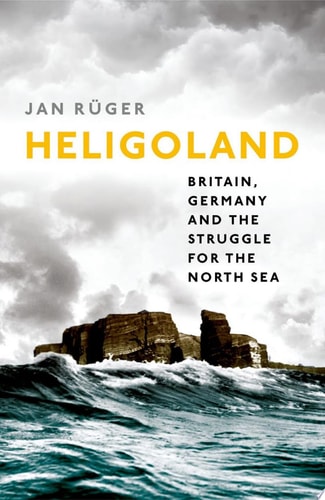
Heligoland
0
0
As an Amazon Associate and affiliate partner, Menrva Books earns from qualifying purchases. Learn more
Author Description
On 18 April 1947, British forces set off the largest non-nuclear explosion in history. The target was a small island in the North Sea, thirty miles off the German coast, which for generations had stood as a symbol of Anglo-German conflict: Heligoland. A long tradition of rivalry was to come to an end here, in the ruins of Hitler's island fortress. Pressed as to why it was not prepared to give Heligoland back, the British government declared that the island represented everything that was wrong with the Germans: 'if any tradition was worth breaking, and if any sentiment was worth changing, then the German sentiment about Heligoland was such a one'. Drawing on a wide range of archival material, Jan Rüger explores how Britain and Germany have collided and collaborated in this North Sea enclave. For much of the nineteenth century, this was Britain's smallest colony, an inconvenient and notoriously discontented outpost at the edge of Europe. Situated at the fault line between imperial and national histories, the island became a metaphor for Anglo-German rivalry once Germany acquired it in 1890. Turned into a naval stronghold under the Kaiser and again under Hitler, it was fought over in both World Wars. Heavy bombardment by the Allies reduced it to ruins, until the Royal Navy re-took it in May 1945. Returned to West Germany in 1952, it became a showpiece of reconciliation, but one that continues to bear the scars of the twentieth century. Tracing this rich history of contact and conflict from the Napoleonic Wars to the Cold War, Heligoland brings to life a fascinating microcosm of the Anglo-German relationship. For generations this cliff-bound island expressed a German will to bully and battle Britain; and it mirrored a British determination to prevent Germany from establishing hegemony on the continent. Caught in between were the Heligolanders and those involved with them: spies and smugglers, poets and painters, sailors and soldiers. Heligoland is the compelling story.
Menrva's Summary
THE THESIS
This book investigates the historical significance of Heligoland as a microcosm of the complex, often volatile relationship between Britain and Germany from the nineteenth century through the Cold War. Jan Rüger, a historian specializing in modern European history, utilizes extensive archival research to examine how this small North Sea island functioned as both a strategic military asset and a symbolic site of national identity. The work argues that the island's transformation from a British colony to a German naval fortress and finally a symbol of post-war reconciliation reflects the broader shifts in Anglo-German geopolitical dynamics.
THE SCOPE MAP
What You Will Find
- A detailed chronological account of Heligoland from the Napoleonic Wars to the 1952 return to West Germany.
- Analysis of the island's role as a British colony and its subsequent militarization under the Kaiser and Hitler.
- Examination of the 1947 British demolition of the island's fortifications.
- Perspectives from diverse historical actors including spies, smugglers, artists, and military personnel.
Scope Limits
- The text focuses primarily on the Anglo-German relationship and does not provide a comprehensive history of the island's internal social development independent of these external powers.
THE AUTHORITY PERSPECTIVE
Historians and reviewers frequently praise the work for its meticulous archival research and its ability to synthesize local history with broader international political trends. Scholars highlight this text as a sophisticated study that successfully uses a specific geographic location to illuminate the shifting tensions between two major European powers.
Page Count:
416
Publication Date:
2016-01-01
Publisher:
Oxford University Press
ISBN-10:
0191652709
ISBN-13:
9780191652707
History
European History
Political History
United Kingdom
Military History
Germany
Cultural History
Community Tags
Similar Books