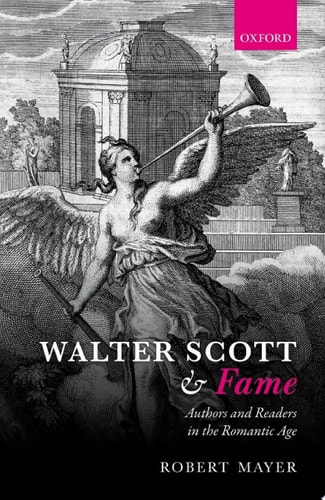
Walter Scott and Fame: Authors and Readers in the Romantic Age
0
0
As an Amazon Associate and affiliate partner, Menrva Books earns from qualifying purchases. Learn more
Author Description
Walter Scott and Fame is a study of correspondences between Scott and socially and culturally diverse readers of his work in the English-speaking world in the early nineteenth century. Examining authorship, reading, and fame, the book is based on extensive archival research, especially in the collection of letters to Scott in the National Library of Scotland. Robert Mayer demonstrates that in Scott's literary correspondence constructions of authorship, reading strategies, and versions of fame are posited, even theorized. Scott's reader-correspondents invest him with power but they also attempt to tap into or appropriate some of his authority. Scott's version of authorship sets him apart from important contemporaries like Wordsworth and Byron, who adhered, at least as Scott viewed the matter, to a rarefied conception of the writer as someone possessed of extraordinary power. The idea of the author put in place by Scott in dialogue with his readers establishes him as a powerful figure who is nevertheless subject to the will of his audience. Scott's literary correspondence also demonstrates that the reader can be a very powerful figure and that we should regard reading not just as the reception of texts but also as the apprehension of an author-function. Thus, Scott's correspondence makes it clear that the relationship between authors and readers is a dynamic, often fraught, connection, which needs to be understood in terms of the new culture of celebrity that emerged during Scott's working life. Along with Byron, the study shows, Scott was at the centre of this transformation.
Menrva's Summary
THE THESIS
This study investigates how the correspondence between Walter Scott and his diverse readership shaped the early nineteenth-century understanding of authorship, fame, and the emerging culture of celebrity. Robert Mayer, a scholar of Romantic-era literature, utilizes extensive archival research from the National Library of Scotland to analyze letters sent to Scott. He argues that Scott’s interactions with his audience established a unique model of authorship where the writer remains a powerful figure while simultaneously being subject to the influence and expectations of his readers.
THE SCOPE MAP
What You Will Find
- Analysis of archival letters from Scott's diverse readership
- Comparative study of Scott, Wordsworth, and Byron regarding authorial identity
- Examination of the early nineteenth-century culture of celebrity
- Theoretical framework for the 'author-function' in reader-writer relationships
Scope Limits
- Does not provide a comprehensive biography of Walter Scott's life
- Does not focus on the literary analysis of Scott's novels themselves
THE AUTHORITY PERSPECTIVE
Scholars recognize this work as a significant contribution to the study of Romantic-era literary culture and the history of reading. Readers frequently note the academic density of the prose and the meticulous use of primary source correspondence to support the author's arguments.
Page Count:
221
Publication Date:
1900-01-01
Publisher:
Oxford University Press
ISBN-10:
0191836435
ISBN-13:
9780191836435
History
Biography
19th Century
Romanticism
Literary Criticism