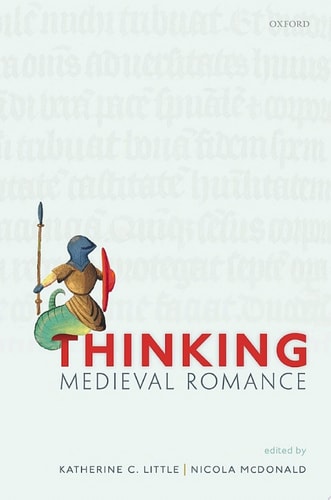
Thinking Medieval Romance
0
0
As an Amazon Associate and affiliate partner, Menrva Books earns from qualifying purchases. Learn more
Author Description
Medieval romances with their magic fountains, brave knights, and beautiful maidens have come to stand for the Middle Ages more generally. This close connection between the medieval and the romance has had consequences for popular conceptions of the Middle Ages, an idealized fantasy of chivalry and hierarchy, and also for our understanding of romances, as always already archaic, part of a half-forgotten past. And yet, romances were one of the most influential and long-lasting innovations of the medieval period. To emphasize their novelty is to see the resources medieval people had for thinking about their contemporary concern and controversies, whether social order, Jewish/ Christian relations, the Crusades, the connectivity of the Mediterranean, women's roles as mothers, and how to write a national past. This volume takes up the challenge to 'think romance', investigating the various ways that romances imagine, reflect, and describe the challenges of the medieval world.
Menrva's Summary
THE THESIS
This volume investigates how medieval romances functioned as sophisticated intellectual tools for navigating the complex social, political, and religious controversies of the Middle Ages. Katherine C. Little and Nicola McDonald, both established scholars in medieval literature, argue that these texts were not merely escapist fantasies but active sites of cultural inquiry. By examining the novelty of the genre, the authors demonstrate how medieval writers utilized romance to address pressing contemporary issues such as social hierarchy, religious identity, and geopolitical connectivity.
THE SCOPE MAP
What You Will Find
- Analysis of medieval romance as a vehicle for contemporary social and political commentary
- Examination of themes including Jewish-Christian relations, the Crusades, and Mediterranean connectivity
- Discussions on the construction of national identity and gender roles within medieval literature
Scope Limits
- The text does not provide a comprehensive history of every romance ever written
- It does not focus on the linguistic evolution of Middle English or Old French dialects
THE AUTHORITY PERSPECTIVE
Scholars and students of medieval literature frequently cite this collection for its ability to bridge the gap between popular perceptions of chivalry and the actual intellectual rigor of the genre. Experts highlight the text as a valuable resource for those seeking to understand how medieval narratives engaged with the specific historical anxieties of their time.
Page Count:
255
Publication Date:
2018-01-01
Publisher:
OUP Oxford
ISBN-10:
0192514369
ISBN-13:
9780192514363
History
European History
English
Romances
Literary Criticism
English & College Success
Community Tags
Similar Books