Images of Mithra
0
0
As an Amazon Associate and affiliate partner, Menrva Books earns from qualifying purchases. Learn more
Author Description
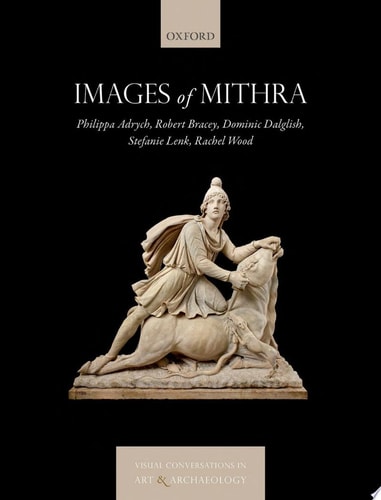
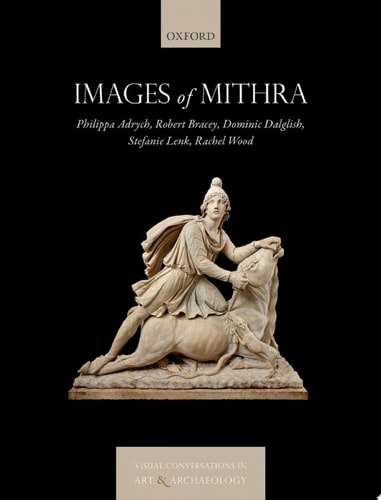
With a history of use extending back to Vedic texts of the second millennium BC, derivations of the name Mithra appear in the Roman Empire, across Sasanian Persia, and in the Kushan Empire of southern Afghanistan and northern India during the first millennium AD. Even today, this name has a place in Yazidi and Zoroastrian religion. But what connection have Mihr in Persia, Miiro in Kushan Bactria, and Mithras in the Roman Empire to one another? Over the course of the volume, specialists in the material culture of these diverse regions explore appearances of the name Mithra from six distinct locations in antiquity. In a subversion of the usual historical process, the authors begin not from an assessment of texts, but by placing images of Mithra at the heart of their analysis. Careful consideration of each example's own context, situating it in the broader scheme of religious traditions and on-going cultural interactions, is key to this discussion. Such an approach opens up a host of potential comparisons and interpretations that are often side-lined in historical accounts. What Images of Mithra offers is a fresh approach to the ways in which gods were labelled and depicted in the ancient world. Through an emphasis on material culture, a more nuanced understanding of the processes of religious formation is proposed in what is but the first part of the Visual Conversations series.
Menrva's Summary
THE THESIS
This volume investigates the historical and cultural connections between diverse manifestations of the deity Mithra across the Roman, Sasanian, and Kushan empires. The authors, a collaborative group of specialists in material culture and ancient history, argue that shifting the analytical focus from textual records to visual representations allows for a more nuanced understanding of religious formation. By examining specific artifacts from six distinct geographical locations, the text proposes a methodology that prioritizes the physical context of religious imagery over traditional literary interpretations.
THE SCOPE MAP
What You Will Find
- Comparative analysis of Mithraic iconography across the Roman Empire, Sasanian Persia, and Kushan Bactria.
- Methodological framework for interpreting religious labels and depictions through material culture.
- Case studies from six distinct archaeological sites spanning the first millennium AD.
Scope Limits
- The text does not provide an exhaustive survey of all known Mithraic inscriptions or textual references.
- It does not attempt to construct a singular, unified theology for the various iterations of the deity.
THE AUTHORITY PERSPECTIVE
Experts highlight this work as a significant contribution to the study of ancient religious interaction, particularly for its focus on visual evidence. Readers frequently note the academic density of the prose, which is intended for scholars and students of archaeology and ancient history.
Page Count:
231
Publication Date:
2017-01-01
Publisher:
OUP Oxford
ISBN-10:
0192511114
ISBN-13:
9780192511119
History
Archaeology
Mithraism
Art History
Humanities