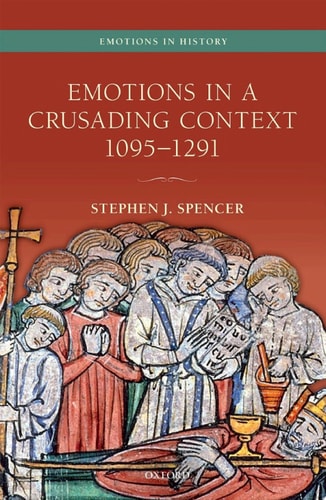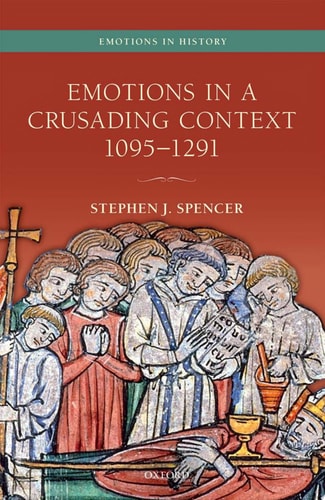
Emotions in a Crusading Context, 1095-1291
0
0
As an Amazon Associate and affiliate partner, Menrva Books earns from qualifying purchases. Learn more
Author Description
Emotions In A Crusading Context Is The First Book-length Study Of The Emotional Rhetoric Of Crusading. It Investigates The Ways In Which A Number Of Emotions And Affective Displays — Primarily Fear, Anger, And Weeping — Were Understood, Represented, And Utilized In Twelfth- And Thirteenth-century Western Narratives Of The Crusades, Making Use Of A Broad Range Of Comparative Material To Gauge The Distinctiveness Of Those Texts: Crusader Letters, Papal Encyclicals, Model Sermons, Chansons De Geste, Lyrics, And An Array Of Theological And Philosophical Treatises. In Addition To Charting Continuities And Changes Over Time In The Emotional Landscape Of Crusading, This Study Identifies The Underlying Influences Which Shaped How Medieval Authors Represented And Used Emotions; Analyzes The Passions Crusade Participants Were Expected To Embrace And Reject; And Assesses Whether The Idea Of Crusading Created A Profoundly New Set Of Attitudes Towards Emotions. Emotions In A Crusading Context Calls On Scholars Of The Crusades To Reject The Traditional Methodological Approach Of Taking The Emotional Descriptions Embedded Within Historical Narratives As Straightforward Reflections Of Protagonists' Lived Feelings, And In So Doing Challenges The Long Historiographical Tradition Of Reconstructing Participants' Beliefs And Experiences From These Texts. Within The History Of Emotions, Stephen J. Spencer Demonstrates That, Despite The Ongoing Drive To Develop New Methodologies For Studying The Emotional Standards Of The Past, Typified By Experiments In 'neurohistory', The Social Constructionist (or Cultural-historical) Approach Still Has Much To Offer The Historian Of Medieval Emotions.
Menrva's Summary
THE THESIS
This study investigates how emotional rhetoric, specifically fear, anger, and weeping, functioned as a constructed tool within Western narratives of the Crusades between 1095 and 1291. Dr. Stephen J. Spencer, a specialist in medieval history, evaluates the discrepancy between historical emotional descriptions and the actual lived experiences of participants. He argues that these emotional displays were often stylized rhetorical devices rather than transparent reflections of internal states, challenging traditional historiographical methods that treat such texts as direct evidence of individual belief.
THE SCOPE MAP
What You Will Find
- Analysis of emotional representations in crusader letters, papal encyclicals, and model sermons.
- Examination of literary sources including chansons de geste and medieval lyrics.
- A comparative framework assessing theological and philosophical treatises of the twelfth and thirteenth centuries.
Scope Limits
- The study does not attempt to reconstruct the genuine psychological states of individual crusaders.
- It focuses primarily on Western Latin Christian perspectives rather than Eastern or Islamic emotional frameworks.
THE AUTHORITY PERSPECTIVE
Scholars recognize this work as a significant intervention in the history of emotions, particularly for its critique of 'neurohistory' in favor of social constructionist methodologies. Experts highlight the text as a necessary corrective for historians who rely on medieval narratives as unmediated windows into the past.
Page Count:
320
Publication Date:
2019-01-01
Publisher:
Oxford University Press
ISBN-10:
0192569856
ISBN-13:
9780192569851
History
History of Emotions
Crusades
Cultural History