Laughter and Power in the Twelfth Century
0
0
As an Amazon Associate and affiliate partner, Menrva Books earns from qualifying purchases. Learn more
Author Description
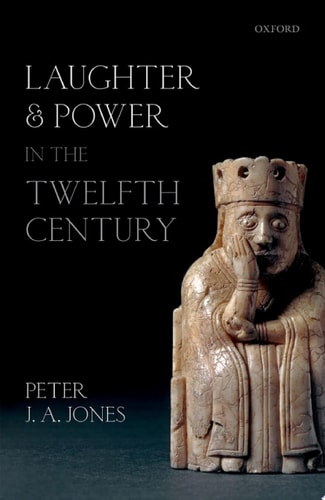
Towards the end of the twelfth century, powerful images of laughing kings and saints began to appear in texts circulating at the English royal court. At the same time, contemporaries began celebrating the wit, humour, and laughter of King Henry II (r.1154-89) and his martyred Archbishop of Canterbury, Saint Thomas Becket (d.1170). Taking a broad genealogical approach, Laughter and Power in the Twelfth Century traces the emergence of this powerful laughter through an immersive study of medieval intellectual, literary, social, religious, and political debates. Focusing on a cultural renaissance in England, the study situates laughter at the heart of the defining transformations of the second half of the 1100s. With an expansive survey of theological and literary texts, bringing a range of unedited manuscript material to light in the process, Peter J. A. Jones exposes how twelfth-century writers came to connect laughter with spiritual transcendence and justice, and how this connection gave humour a unique political and spiritual power in both text and action. Ultimately, Jones argues that England's popular images of laughing kings and saints effectively reinstated a sublime charismatic authority, something truly rebellious at a moment in history when bureaucracy and codification were first coming to dominate European political life.
Menrva's Summary
THE THESIS
This study investigates how the emergence of laughter as a cultural motif in twelfth-century England functioned as a mechanism for asserting charismatic authority amidst the rise of administrative bureaucracy. Peter J. A. Jones, a scholar of medieval intellectual and cultural history, utilizes a broad genealogical approach to analyze how contemporary writers linked humor to spiritual transcendence and justice. By examining theological and literary texts, including previously unedited manuscripts, the author argues that the portrayal of laughing kings and saints served as a rebellious assertion of individual power against the encroaching codification of political life.
THE SCOPE MAP
What You Will Find
- Analysis of the cultural renaissance in England during the second half of the 1100s.
- Examination of the political and spiritual significance of humor associated with King Henry II and Saint Thomas Becket.
- Integration of unedited medieval manuscript material alongside established theological and literary texts.
Scope Limits
- The study focuses primarily on the English royal court and its specific cultural output.
- It does not provide a comprehensive survey of European laughter traditions outside the context of the twelfth-century English political transformation.
THE AUTHORITY PERSPECTIVE
Scholars and historians recognize this work as a specialized contribution to medieval cultural studies, particularly for its focus on the intersection of political authority and literary expression. Readers frequently note the academic density of the prose, which is intended for those familiar with the intellectual and social history of the twelfth century.
Page Count:
224
Publication Date:
2019-01-01
Publisher:
OUP Oxford
ISBN-10:
0192581627
ISBN-13:
9780192581624
History
Theology
Literary Criticism
Cultural History
Political History
Wit and humor
European History
Power Social sciences
Great Britain
Community Tags
Similar Books