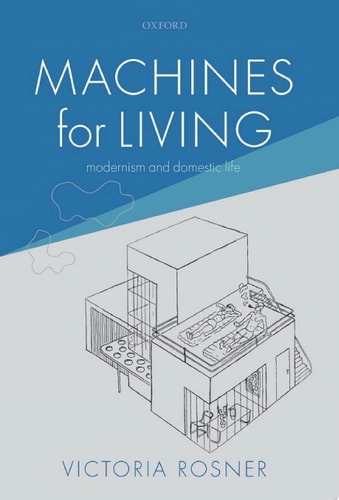
Machines for Living: Modernism and Domestic Life
0
0
As an Amazon Associate and affiliate partner, Menrva Books earns from qualifying purchases. Learn more
Author Description
Changes in the routines of domestic life were among the most striking social phenomena of the period between the two World Wars, when the home came into focus as a problem to be solved: re-imagined, streamlined, electrified, and generally cleaned up. Modernist writers understood themselves to be living in an epochal moment when the design and meaning of home life were reconceived. Moving among literature, architecture, design, science, and technology, Machines for Living shows how the modernization of the home led to profound changes in domestic life and relied on a set of emergent concepts, including standardization, scientific method, functionalism, efficiency science, and others, that form the basis of literary modernism and stand at the confluence of modernism and modernity. Even as modernist writers criticized the expanding reach of modernization into the home, they drew on its conceptual vocabulary to develop both the thematic and formal commitments of literary modernism. Rosner's work develops a new methodology for interdisciplinary modernist studies and shows how the reinvention of domestic life is central to modernist literature.
Menrva's Summary
THE THESIS
This work investigates how the modernization of domestic spaces between the two World Wars fundamentally shaped the thematic and formal structures of literary modernism. Victoria Rosner, an academic specializing in modernist studies, examines the intersection of architecture, design, and literature to argue that the home served as a critical site for testing new concepts like efficiency and standardization. By analyzing the interplay between domestic design and modernist writing, the book posits that the reinvention of the home was not merely a backdrop but a central driver of modernist innovation.
THE SCOPE MAP
What You Will Find
- Historical analysis of domestic life between the two World Wars
- Examination of concepts including standardization, functionalism, and efficiency science
- Interdisciplinary methodology linking architectural design to literary form
- Critical readings of modernist texts through the lens of domestic technology
Scope Limits
- The study focuses primarily on the Western modernist canon and its specific historical context
- It does not provide a comprehensive history of domestic architecture outside of its relationship to modernist literature
THE AUTHORITY PERSPECTIVE
Scholars frequently cite this work as a foundational text for understanding the material culture of modernism. Readers often note the academic density of the prose, which is well-suited for researchers and students of interdisciplinary literary studies.
Page Count:
320
Publication Date:
2020-01-01
Publisher:
OUP Oxford
ISBN-10:
0192583816
ISBN-13:
9780192583819
History
Architecture
Modernism
Technology and Society
Indigenous
Domestic History
English literature
Literary Criticism
21st Century
Community Tags
Similar Books