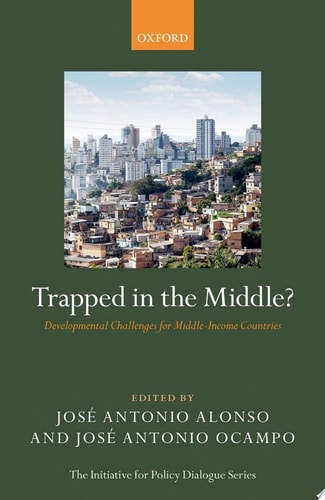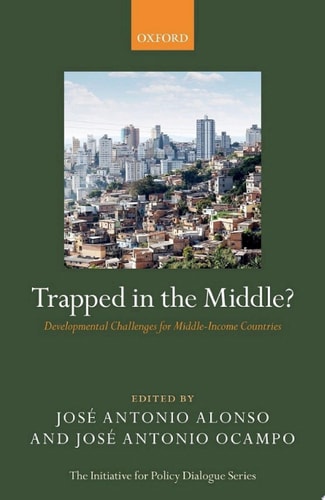
Trapped in the Middle?: Developmental Challenges for Middle-Income Countries
0
0
As an Amazon Associate and affiliate partner, Menrva Books earns from qualifying purchases. Learn more
Author Description
There is growing evidence that overcoming the low-income threshold and reaching middle-income status is not sufficient for countries to converge toward high-income levels. Few middle-income countries have successfully completed that transit in recent decades, with the majority remaining in the middle-income group, and so facing what has come to be called "the middle-income trap". It is therefore essential to explore whether middle-income traps really exist and, if they do, how these pitfalls are manifested, what their causes are, what economic policy measures are required to escape from them, and what international cooperation can do to support this process. Trapped in the Middle? brings together diverse perspectives on these important questions, providing new evidence and analytical approaches to enrich the debate on the domestic and international challenges faced by a significant number of middle-income countries, in which over three-quarters of the global population live.
Menrva's Summary
THE THESIS
This book investigates the structural and policy-based factors that prevent middle-income nations from transitioning into high-income economies, a phenomenon widely referred to as the middle-income trap. The authors, including José Antonio Alonso and José Antonio Ocampo, utilize a collection of expert analyses to evaluate whether this stagnation is a systemic reality or a result of specific domestic and international policy failures. The text argues that escaping this trap requires a multifaceted approach involving industrial policy, institutional reform, and strategic international cooperation.
THE SCOPE MAP
What You Will Find
- Comparative analysis of economic growth trajectories across various middle-income regions.
- Theoretical frameworks defining the mechanisms of the middle-income trap.
- Policy recommendations for structural transformation and productivity enhancement.
- Examination of the role of international trade and global governance in national development.
Scope Limits
- The text does not provide a singular, universal solution applicable to all nations regardless of their specific geopolitical context.
- It focuses primarily on macroeconomic and structural factors rather than micro-level cultural or sociological variables.
THE AUTHORITY PERSPECTIVE
Experts and academics in development economics frequently cite this work as a comprehensive resource for understanding the complexities of the middle-income trap. Readers often note the academic density of the prose, which is well-suited for policy makers and researchers interested in rigorous economic analysis.
Page Count:
365
Publication Date:
2020-01-01
Publisher:
OUP Oxford
ISBN-10:
0192594249
ISBN-13:
9780192594242
Economics
Global Studies
International Policy