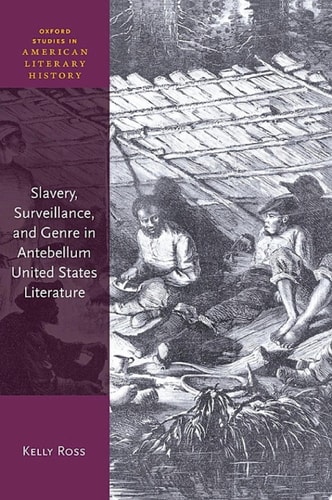
Slavery, Surveillance, and Genre in Antebellum United States Literature
0
0
As an Amazon Associate and affiliate partner, Menrva Books earns from qualifying purchases. Learn more
Author Description
Slavery, Surveillance, and Genre in Antebellum United States Literature argues for the existence of deep, often unexamined, interconnections between genre and race by tracing how surveillance migrates from the literature of slavery to crime, gothic, and detective fiction. Attending to the long history of surveillance and policing of African Americans, the book challenges the traditional conception of surveillance as a top-down enterprise, equally addressing the tactics of sousveillance (watching from below) that enslaved people and their allies used to resist, escape, or merely survive racial subjugation.Examining the dialectic of racialized surveillance and sousveillance from fugitive slave narratives to fictional genres focused on crime and detection, the book shows how these genres share a thematic concern with the surveillance of racialized bodies and formal experimentation with ways of telling a story in which certain information is either rendered visible or kept hidden. Through close readings of understudied fugitive slave narratives published in the 1820s and 1830s, as well as texts by Edgar Allan Poe, Herman Melville, Frederick Douglass, Hannah Crafts, and Harriet Jacobs, Ross analyzes the different ways white and black authors take up these issues in their writing—from calming white fears of enslaved rebellion to abolishing slavery—and demonstrates how literary representations ultimately destabilize any clear-cut opposition between watching from above and below. In so doing, the book demonstrates the importance of race to surveillance studies and claims a greater role for the impact of surveillance on literary expression in the US during the era of slavery.
Menrva's Summary
THE THESIS
This book investigates the intersection of racialized surveillance and literary genre in the antebellum United States, arguing that surveillance practices fundamentally shaped the formal development of crime, gothic, and detective fiction. Kelly Ross, a scholar of American literary history, utilizes a framework that contrasts traditional top-down surveillance with the tactics of sousveillance—the act of watching from below—employed by enslaved individuals. By analyzing a range of texts from fugitive slave narratives to canonical fiction, the author demonstrates how the management of information and visibility became a central concern for both white and Black writers during the era of slavery.
THE SCOPE MAP
What You Will Find
- Analysis of the dialectic between surveillance and sousveillance in antebellum literature.
- Examination of fugitive slave narratives from the 1820s and 1830s alongside works by Poe, Melville, Douglass, Crafts, and Jacobs.
- Exploration of how racialized bodies are represented within crime, gothic, and detective genres.
Scope Limits
- The study focuses specifically on the antebellum period and does not extend into post-Civil War surveillance technologies or literature.
- The analysis is primarily limited to the United States literary context.
THE AUTHORITY PERSPECTIVE
Scholars in the field of American literary history identify this work as a significant contribution to the integration of surveillance studies with racial discourse. Readers frequently note the academic density of the prose and the precision with which the author connects historical policing tactics to literary form.
Page Count:
337
Publication Date:
2022-01-01
Publisher:
OUP Oxford
ISBN-10:
0192669028
ISBN-13:
9780192669025
American History
Antebellum
Literary Criticism
English & College Success
English
Community Tags
Other Editions(3)

Similar Books


Reader Comments
Share Your Thoughts
No comments yet. Be the first to share your thoughts!