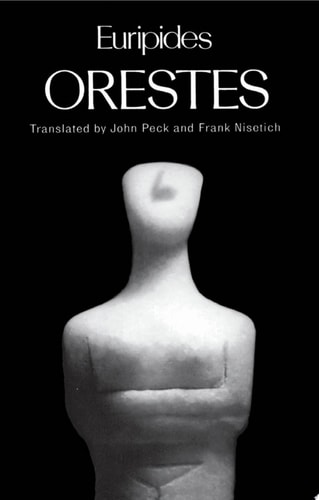
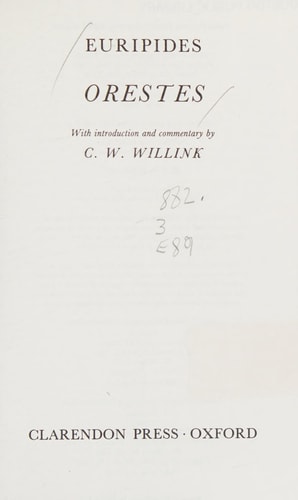
Orestes
0
0
As an Amazon Associate and affiliate partner, Menrva Books earns from qualifying purchases. Learn more
Author Description
Based on the conviction that only translators who write poetry themselves can properly recreate the celebrated and timeless tragedies of Aeschylus, Sophocles, and Euripides, The Greek Tragedy in New Translations series offers new translations that go beyond the literal meaning of the Greek in order to evoke the poetry of the originals. Under the editorship of Herbert Golder and the late William Arrowsmith, each volume includes a critical introduction, commentary on the text, full stage directions, and a glossary of the mythical and geographical references in the plays.Produced more frequently on the ancient stage than any other tragedy, Orestes retells with striking innovations the story of the young man who kills his mother to avenge her murder of his father. Though eventually exonerated, Orestes becomes a fugitive from the Furies (avenging spirits) of his mother's blood. On the brink of destruction, he is saved in the end by Apollo, who had commanded the matricide. Powerful and gripping, Orestes sweeps us along with a momentum that starting slowly, builds inevitably to one of the most spectacular climaxes in all Greek tragedy.
Menrva's Summary
THE PULSE
Orestes faces the immediate threat of execution by the citizens of Argos for the murder of his mother, Clytemnestra. Driven by the command of Apollo to avenge his father, Orestes finds himself abandoned by the god and hunted by the Furies. The narrative follows his desperate attempts to secure his survival alongside his sister Electra and his friend Pylades. The play utilizes a high-stakes, claustrophobic structure that emphasizes the rapid descent from political trial to violent insurrection within the palace walls.
INSIDE THE PAGES
- Exploration of the moral ambiguity surrounding divine commands and human accountability
- Use of the 'deus ex machina' device to resolve the central conflict
- Focus on the psychological deterioration of the protagonist under extreme duress
- Integration of choral odes that provide commentary on the unfolding events
- Depiction of the complex sibling bond between Orestes and Electra
- Examination of the tension between private vengeance and public justice
- Incorporation of stage directions that emphasize the physical setting of the palace
- Inclusion of a glossary detailing the specific mythical and geographical context of the era
THE COLLECTIVE ECHO
Readers and critics frequently highlight the play's unconventional tone, which shifts rapidly between intense tragedy and dark irony. Discussion often centers on Euripides' subversion of traditional heroic tropes, particularly through the portrayal of Orestes as a fractured and desperate figure rather than a stoic avenger. The pacing is noted for its deliberate acceleration, moving from a state of paralysis to a chaotic and violent resolution. Scholars often emphasize the play's relevance to contemporary questions regarding the legitimacy of state violence and the reliability of divine authority.
Page Count:
128
Publication Date:
1995-06-08
Publisher:
Oxford University Press
ISBN-10:
0195096592
ISBN-13:
9780195096590
Drama
Classical
Plays
Mythology
Dramatic works
Greek Tragedy
Community Tags
Other Editions(9)





Reader Comments
Share Your Thoughts
No comments yet. Be the first to share your thoughts!