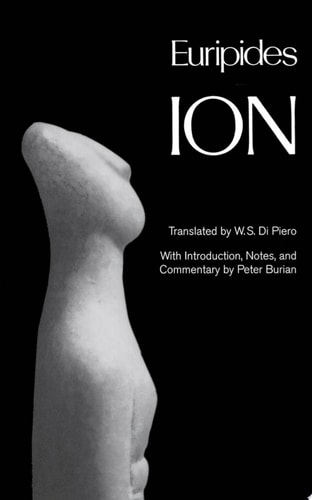
Ion
0
0
As an Amazon Associate and affiliate partner, Menrva Books earns from qualifying purchases. Learn more
Author Description
Based on the conviction that only translators who write poetry themselves can properly recreate the celebrated and timeless tragedies of Aeschylus, Sophocles, and Euripides, The Greek Tragedies in New Translations series offers new translations that go beyond the literal meaning of the Greek in order to evoke the poetry of the originals. Under the editorship of Herbert Golder and the late William Arrowsmith, each volume includes a critical introduction, commentary on the text, full stage directions, and a glossary of the mythical and geographical references in the plays.One of Euripides' late plays, Ion is a complex enactment of the changing relations between the human and divine orders and the way in which our understanding of the gods is mediated and re-visioned by myths. The story begins years before the play begins, with the rape of the mortal Kreousa, queen of Athens, by Apollo. Kreousa bears Apollos' child in secret then abandons it. Unbeknownst to her, Apollo has the child brought to his temple at Delphi to be reared by the priestess as ward of the shrine. Many years later, Kreousa, now married to the foreigner Xouthos but childless, comes to Delphi seeking prophecy about children. Apollo, however, speaking through the oracle, bestows the temple ward, Ion, on Xouthos as his child. Enraged, Kreousa conspires to kill as an interloper the very son she has despaired of finding. After mother and son both try to kill each other, the priestess reveals the birth tokens that permit Kreousa to recognize and embrace the child she thought was dead. Ion discovers the truth of his parentage and departs for Athens, as a mixed blood of humanity and divinity, to participate in the life of the polis.In Ion, disturbing riptides of thought and feeling run just below the often shimmering surfaces of Euripidean melodrama. Although the play contains some of Euripides' most beautiful lyrical writing, it quivers throughout with near disasters, poorly informed actions and m
Menrva's Summary
THE PULSE
The discovery of a long-lost son at the temple of Delphi triggers a cycle of vengeance and divine manipulation between a mother and her abandoned child. After years of childless marriage, Queen Kreousa seeks an oracle at Delphi, only to be confronted by a young man named Ion, who has been raised as a temple ward. Unbeknownst to both, Ion is the product of a past divine encounter between Kreousa and Apollo, leading to a series of near-fatal misunderstandings and conspiracies. The narrative unfolds through the conventions of Greek drama, utilizing dialogue and choral odes to explore the volatile intersection of human desperation and divine intervention.
INSIDE THE PAGES
- Utilization of the Greek tragic structure including choral odes and dialogue.
- Exploration of divine influence on mortal affairs and human agency.
- Incorporation of birth tokens as a mechanism for recognition and resolution.
- Focus on the tension between the Athenian polis and foreign identity.
- Examination of the psychological impact of abandonment and trauma.
- Use of dramatic irony regarding the true parentage of the protagonist.
- Integration of stage directions to facilitate modern performance.
- Inclusion of critical commentary and glossary for historical context.
THE COLLECTIVE ECHO
Readers frequently highlight the play's unique position as a tragicomedy that balances dark themes of rape and infanticide with a surprisingly hopeful resolution. Discussion often centers on the portrayal of Apollo, whose divine detachment serves as a catalyst for the human suffering depicted on stage. Critics often note the sophisticated use of melodrama and the intricate plotting that distinguishes this work from more traditional tragedies. The play remains a subject of intense study for its exploration of identity and the complex relationship between the mortal and divine realms.
Page Count:
112
Publication Date:
1996-06-27
Publisher:
Oxford University Press
ISBN-10:
0195094514
ISBN-13:
9780195094510
Drama
Epic Poetry
Classical
Greek Tragedy
Plays
Mythology
Community Tags
Other Editions(13)
Bloomsbury UK
2014
Default edition
Digireads.com
2011
Kessinger Publishing, LLC
2010
Kessinger Publishing
2010
CreateSpace Independent Publishing Platform
2009
BiblioLife
2009
BiblioBazaar
2008

Kessinger Publishing
2004

Weidmann
2000
Aris & Phillips
1997
Oxford University Press
1996
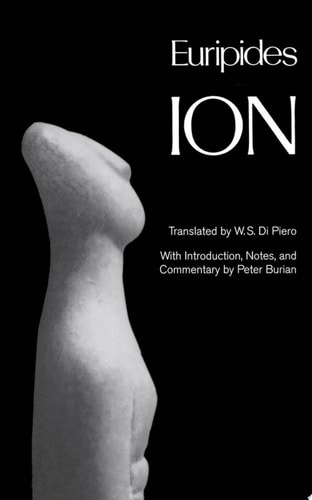
Oxford University Press Academic US
1996
Routledge
1954
Similar Books
Reader Comments
Share Your Thoughts
No comments yet. Be the first to share your thoughts!