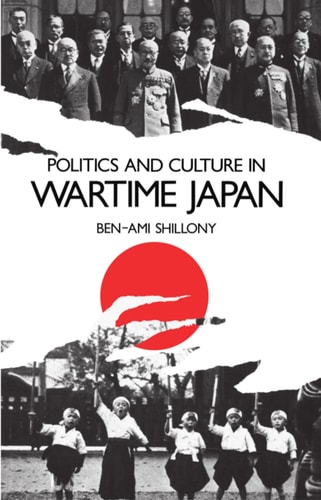
Politics and Culture in Wartime Japan
0
0
As an Amazon Associate and affiliate partner, Menrva Books earns from qualifying purchases. Learn more
Author Description
The Pacific War was the most traumatic experience for Japan in modern times. This book examines the politics and culture of Japan during this period: the establishment of the wartime regime--its character and limitations; the actions and reactions of the emperor, the bureaucrats, and the politicians; the deposing of the Prime Minister in the middle of the war; political developments under his successors; the role of the press; the behavior of the intellectuals; and prevailing attitudes towards the West. Shillony argues that the wartime regime of Japan was very different from contemporary totalitarian states. The political values of the Japanese were part of a wider cultural milieu, in which traditional concepts had already been affected by contact with Western civilivzation.
Menrva's Summary
THE THESIS
This book investigates the unique political and cultural structure of Japan during the Pacific War to determine how its wartime regime functioned in comparison to other totalitarian states of the era. Ben-ami Shillony, a scholar of Japanese history, utilizes primary source documentation and political analysis to challenge the conventional view of Japan as a monolithic totalitarian state. He argues that the Japanese wartime government was a complex system shaped by traditional values interacting with Western influences, resulting in a regime with distinct limitations and internal political dynamics.
THE SCOPE MAP
What You Will Find
- Analysis of the wartime regime's establishment, character, and structural limitations.
- Examination of political maneuvers, including the removal of the Prime Minister during the conflict.
- Evaluation of the roles played by the emperor, bureaucrats, politicians, the press, and intellectuals.
- Discussion of Japanese cultural attitudes toward the West and the influence of traditional concepts on modern governance.
THE AUTHORITY PERSPECTIVE
Historians and scholars of East Asian studies frequently cite this work for its nuanced examination of the Japanese political apparatus during the 1930s and 1940s. The text is recognized as a significant contribution to the understanding of how traditional culture and modern political pressures intersected during the Pacific War.
Page Count:
256
Publication Date:
1991-09-05
Publisher:
Clarendon Press
ISBN-10:
0198202601
ISBN-13:
9780198202608
History
Japan
Military History
Cultural History
Community Tags
Other Editions(3)

Similar Books