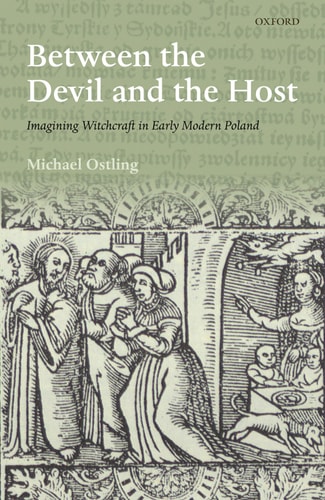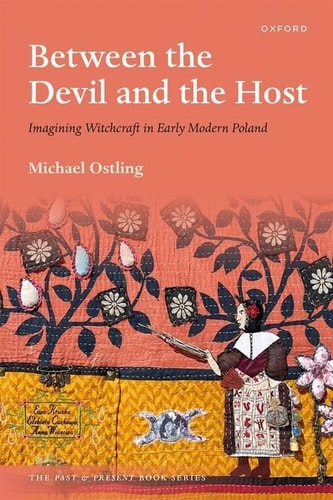
Between the Devil and the Host: Imagining Witchcraft in Early Modern Poland
0
0
As an Amazon Associate and affiliate partner, Menrva Books earns from qualifying purchases. Learn more
Author Description
Outside the imagination, witches don't exist. But in Poland and in Europe and its colonies in the early modern period, people imagined their neighbours to be witches, with tragic results. For the first time in English, Michael Ostling tells the story of the imagined Polish witches, showing how ordinary peasant-women got caught in webs of suspicion and accusation, finally confessing under torture to the most heinous of crimes. Through a close reading of accusations and confessions, Ostling also shows how witches imagined themselves and their own religious lives. Paradoxically, the tales they tell of infanticide and host-desecration reveal to us a culture of deep Catholic piety, while the stories they tell of demonic sex and the treasure-bringing ghosts of unbaptized babies uncover a complex folklore at the margins of Christian orthodoxy. Caught between the devil and the host, the self-imagined Polish witches reflect the religion of their place and time, even as they stand accused of subverting and betraying that religion. Through the dark glass of witchcraft Ostling explores the religious lives of early modern women and men: their gender attitudes, their Christian faith and folk cosmology, their prayers and spells, their adoration of Christ incarnate in the transubstantiated Eucharist, and their relations with goblin-like house demons and ghosts.
Menrva's Summary
THE THESIS
This book investigates how the cultural and religious imagination of early modern Poland facilitated the construction of witchcraft accusations and the subsequent persecution of individuals. Dr. Michael Ostling, a scholar of religious history, utilizes primary source records of accusations and confessions to analyze the intersection of Catholic piety and folk cosmology. He argues that the phenomenon of the 'imagined witch' reveals deep-seated societal anxieties regarding gender, orthodoxy, and the supernatural. By examining these testimonies, the author reconstructs the internal religious lives of those accused, positioning their experiences within the broader context of Polish cultural history.
THE SCOPE MAP
What You Will Find
- Analysis of legal records, including trial transcripts, accusations, and confessions from early modern Poland.
- Examination of the synthesis between official Catholic doctrine and peripheral folk beliefs regarding demons and spirits.
- Investigation into the gendered nature of witchcraft accusations and the social dynamics of peasant communities.
- Exploration of the symbolic significance of the Eucharist and demonic imagery in the context of religious identity.
THE AUTHORITY PERSPECTIVE
Scholars and historians identify this work as a significant contribution to the study of early modern European witchcraft, particularly for its focus on the Polish context. Readers frequently note the academic rigor of the text and its ability to bridge the gap between theological history and anthropological folklore.
Page Count:
304
Publication Date:
2024-01-01
Publisher:
Oxford University Press
ISBN-10:
0198867115
ISBN-13:
9780198867111
History
Witchcraft
European History
Folklore
Cultural History