Theatric Revolution: Drama, Censorship, and Romantic Period Subcultures 1773-1832
0
0
As an Amazon Associate and affiliate partner, Menrva Books earns from qualifying purchases. Learn more
Author Description
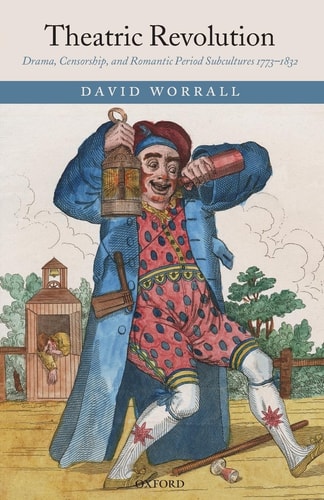
The theatre and drama of the late Georgian period have been the focus of a number of recent studies, but such work has tended to ignore its social and political contexts. Theatric Revolution redresses the balance by considering the role of stage censorship during the Romantic period, an era otherwise associated with the freedom of expression. Looking beyond the Royal theatres at Covent Garden and Drury Lane which have dominated most recent accounts of the period, this book examines the day-to-day workings of the Lord Chamberlain's Examiner of Plays and shows that radicalized groups of individuals continuously sought ways to evade the suppression of both playhouses and dramatic texts.Incorporating a wealth of new research, David Worrall reveals the centrality of theatre within busy networks of print culture, politics of all casts, elite and popular cultures, and metropolitan and provincial audiences. Ranging from the drawing room of Queen Caroline's private theatrical to the song-and-supper dens of Soho and radical free and easies, Theatric Revolution deals with the complex vitality of Romantic theatrical culture, and its intense politicization at all levels. This fascinating new study will be of great value to cultural historians, as well as to literary and theatre scholars.
Menrva's Summary
THE THESIS
This book investigates the intersection of stage censorship, political radicalism, and theatrical culture in Britain between 1773 and 1832. David Worrall, a scholar of Romantic-era literature and culture, utilizes archival records from the Lord Chamberlain's Examiner of Plays to challenge the traditional focus on elite Royal theatres. He argues that the period was defined by a pervasive, often clandestine, struggle between state-imposed suppression and the expressive demands of diverse, radicalized social groups.
THE SCOPE MAP
What You Will Find
- Analysis of the Lord Chamberlain's censorship mechanisms and their impact on dramatic texts.
- Examination of non-traditional performance spaces, including Soho song-and-supper dens and private theatricals.
- Integration of print culture, political pamphlets, and metropolitan performance networks.
- Case studies of radical groups navigating state suppression to maintain freedom of expression.
THE AUTHORITY PERSPECTIVE
Scholars in the fields of theatre history and Romantic studies recognize this work as a significant contribution to understanding the politicization of performance. Experts frequently highlight the text for its archival depth and its ability to shift the focus from mainstream playhouses to the broader, more volatile landscape of Georgian popular culture.
Page Count:
416
Publication Date:
2008-11-15
Publisher:
Oxford University Press
ISBN-10:
0199239134
ISBN-13:
9780199239139
History
English
Political History
Theater
Romanticism
Drama
English & College Success
Censorship
Theatre
Community Tags
Similar Books