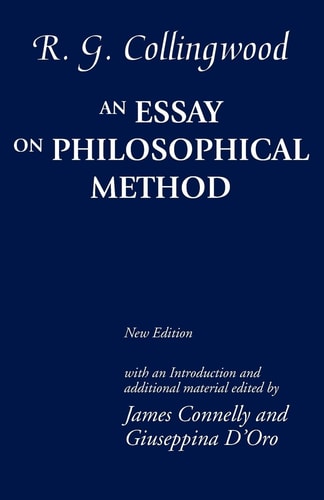
An Essay on Philosophical Method
0
0
As an Amazon Associate and affiliate partner, Menrva Books earns from qualifying purchases. Learn more
Author Description
An Essay on Philosophical Method contains the most sustained discussion in the twentieth century of the subject matter and method of philosophy and an unparalleled explanation of why philosophy has a distinctive domain of enquiry that differs from that of the sciences of nature. This new edition of the Essay focuses on Collingwood's contribution to metaphilosophy and locates his argument for the autonomy of philosophy against the twentieth century trend to naturalize its subject matter. Collingwood argues that the distinctions which philosophers make, for example, between the concepts of duty and utility in moral philosophy, or between the concepts of mind and body in the philosophy of mind, are not empirical taxonomies that cut nature at the joints but semantic distinctions to which there may correspond no empirical classes. This identification of philosophical distinctions with semantic distinctions provides the basis for an argument against the naturalization of the subject matter of philosophy for it entails that not all concepts are empirical concepts and not all classifications are empirical classifications. Collingwood's explanation of why philosophy has a distinctive subject matter thus constitutes a clear challenge to the project of radical empiricism.While not losing sight of its historical context, the introduction to this new edition seeks to locate Collingwood's account of philosophical method against the background of contemporary concerns about the fate of philosophy in the age of science. This volume also contains a substantial amount of previously unpublished material: "The Metaphysics of F. H. Bradley," "Method and Metaphysics," and Collingwood's fascinating correspondence with Gilbert Ryle. The latter will prove to be a mine of information for anyone interested in the origins of analytic philosophy.
Menrva's Summary
THE THESIS
What defines the unique domain of philosophy, and how does its methodology fundamentally diverge from the empirical sciences? R. G. Collingwood, a prominent twentieth-century philosopher, argues for the autonomy of philosophical inquiry against the prevailing trend of naturalism. By examining the nature of philosophical concepts as semantic rather than empirical, he establishes a framework that challenges radical empiricism and defends the distinctiveness of philosophical reasoning.
THE SCOPE MAP
What You Will Find
- An analysis of the distinction between philosophical concepts and empirical taxonomies.
- A critique of the project of radical empiricism and the naturalization of philosophy.
- Primary source material including unpublished essays on F. H. Bradley and correspondence with Gilbert Ryle.
- A metaphilosophical framework for understanding the autonomy of philosophical inquiry.
THE AUTHORITY PERSPECTIVE
Experts regard this work as a foundational text for understanding the development of twentieth-century analytic philosophy and metaphilosophical debates. Readers frequently note the academic density of the prose, which requires careful engagement with Collingwood's specific definitions of philosophical method.
Page Count:
492
Publication Date:
2008-08-15
Publisher:
Oxford University Press
ISBN-10:
019954493X
ISBN-13:
9780199544936
Non-Fiction
Philosophy
Epistemology
Metaphilosophy
History & Surveys
Methodology
Community Tags
Other Editions(5)



Similar Books

Reader Comments
Share Your Thoughts
No comments yet. Be the first to share your thoughts!