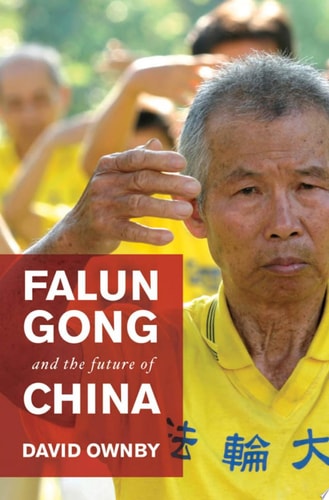
Falun Gong and the Future of China
0
0
As an Amazon Associate and affiliate partner, Menrva Books earns from qualifying purchases. Learn more
Author Description
On April 25, 1999, ten thousand Falun Gong practitioners gathered outside Zhongnanhai, the guarded compound where China's highest leaders live and work, in a day-long peaceful protest of police brutality against fellow practitioners in the neighboring city of Tianjin. Stunned and surprised, China's leaders launched a campaign of brutal suppression against the group which continues to this day. This book, written by a leading scholar of the history of this Chinese popular religion, is the first to offer a full explanation of what Falun Gong is and where it came from, placing the group in the broader context of the modern history of Chinese religion as well as the particular context of post-Mao China.Falun Gong began as a form of qigong, a general name describing physical and mental disciplines based loosely on traditional Chinese medical and spiritual practices. Qigong was "invented" in the 1950s by members of the Chinese medical establishment who were worried that China's traditional healing arts would be lost as China modeled its new socialist health care system on Western biomedicine. In the late 1970s, Chinese scientists "discovered" that qi possessed genuine scientific qualities, which allowed qigong to become part of China's drive for modernization. With the support of China's leadership, qigong became hugely popular in the 1980s and 1990s, as charismatic qigong masters attracted millions of enthusiastic practitioners in what was known as the qigong boom, the first genuine mass movement in the history of the People's Republic.Falun Gong founder Li Hongzhi started his own school of qigong in 1992, claiming that the larger movement had become corrupted by money and magic tricks. Li was welcomed into the qigong world and quickly built a nationwide following of several million practitioners, but ran afoul of China's authorities and relocated to the United States in 1995. In his absence, followers in China began to organize peaceful protests of perceived media slights.
Menrva's Summary
THE THESIS
This book investigates the origins, rapid expansion, and subsequent state-led suppression of the Falun Gong movement within the complex socio-political landscape of post-Mao China. David Ownby, a scholar specializing in the history of Chinese religion, utilizes extensive research and historical context to analyze how a popular qigong practice evolved into a significant challenge to the Chinese Communist Party. The text argues that understanding Falun Gong requires situating it within both the long-standing traditions of Chinese spirituality and the specific modernization pressures of the late twentieth century.
THE SCOPE MAP
What You Will Find
- Historical analysis of the qigong boom in the 1980s and 1990s.
- Examination of the transition from traditional healing arts to modern spiritual movements.
- Documentation of the 1999 Zhongnanhai protest and the subsequent government crackdown.
- Contextualization of Li Hongzhi’s teachings within the broader framework of Chinese popular religion.
THE AUTHORITY PERSPECTIVE
Experts recognize this work as a foundational academic study for understanding the intersection of state power and religious expression in contemporary China. Readers frequently note the balanced, objective tone that Ownby maintains while navigating a highly polarized and sensitive subject matter.
Page Count:
291
Publication Date:
2008-01-01
Publisher:
Oxford University Press
ISBN-10:
0199716374
ISBN-13:
9780199716371
History
Religion
Politics
Kindle eBooks
Sociology
Categories
Kindle Store
Sacred texts
Human rights
Politics & Government
China
Qi Gong
Community Tags
Other Editions(5)


Similar Books










Reader Comments
Share Your Thoughts
No comments yet. Be the first to share your thoughts!