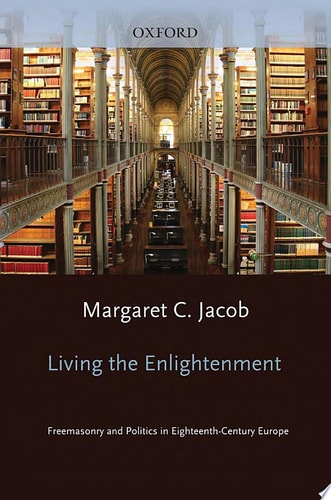
Living the Enlightenment: Freemasonry and Politics in Eighteenth-Century Europe
0
0
As an Amazon Associate and affiliate partner, Menrva Books earns from qualifying purchases. Learn more
Author Description
Long Recognized As More Than The Writings Of A Dozen Or So Philosophes, The Enlightenment Created A New Secular Culture Populated By The Literate And The Affluent. Enamoured Of British Institutions, Continental Europeans Turned To The Imported Masonic Lodges And Found In Them A New Forum That Was Constitutionally Constructed And Logically Egalitarian. Originating In The Middle Ages, When Stone-masons Joined Together To Preserve Their Professional Secrets And To Protect Their Wages, The English And Scottish Lodges Had By The Eighteenth Century Discarded Their Guild Origins And Become An International Phenomenon That Gave Men And Eventually Some Women A Place To Vote, Speak, Discuss And Debate. Margaret Jacob Argues That The Hundreds Of Masonic Lodges Founded In Eighteenth-century Europe Were Among The Most Important Enclaves In Which Modern Civil Society Was Formed. In France, The Netherlands, Belgium, And Britain Men And Women Freemasons Sought To Create A Moral And Social Order Based Upon Reason And Virtue, And Dedicated To The Principles Of Liberty And Equality. A Forum Where Philosophers Met With Men Of Commerce, Government, And The Professions, The Masonic Lodge Created New Forms Of Self-government In Microcosm, Complete With Constitutions And Laws, Elections, And Representatives. This Is The First Comprehensive History Of Enlightenment Freemasonry, From The Roots Of The Society's Political Philosophy And Evolution In Seventeenth-century England And Scotland To The French Revolution. Based On Never-before-used Archival Sources, It Will Appeal To Anyone Interested In The Birth Of Modernity In Europe Or In The Cultural Milieu Of The European Enlightenment.
Menrva's Summary
THE THESIS
This work investigates how the proliferation of Masonic lodges in eighteenth-century Europe functioned as a critical laboratory for the development of modern civil society and democratic political culture. Margaret C. Jacob, a distinguished historian of the Enlightenment, utilizes previously untapped archival records to trace the evolution of Freemasonry from its medieval guild origins to its role as a transnational forum for egalitarian debate. She argues that these lodges provided a structured, constitutional environment where individuals from diverse professional backgrounds could practice self-governance, debate political philosophy, and promote the ideals of liberty and virtue.
THE SCOPE MAP
What You Will Find
- Analysis of the transition from medieval trade guilds to eighteenth-century social and political organizations.
- Examination of the constitutional and electoral mechanisms adopted by Masonic lodges as models for civil society.
- Primary source research from archives in France, the Netherlands, Belgium, and Britain.
- Exploration of the intersection between Enlightenment philosophy and the practical application of egalitarian principles in private associations.
THE AUTHORITY PERSPECTIVE
Scholars recognize this text as a foundational study for understanding the institutional origins of modern European political culture. Readers frequently note the meticulous archival research and the author's ability to connect the internal mechanics of Masonic lodges to broader shifts in Enlightenment social thought.
Page Count:
320
Publication Date:
1991-01-01
Publisher:
Oxford University Press, Incorporated
ISBN-10:
0199762791
ISBN-13:
9780199762798
History
Freemasonry
Freemasons history
European History
Cultural History
Enlightenment
Community Tags
Similar Books