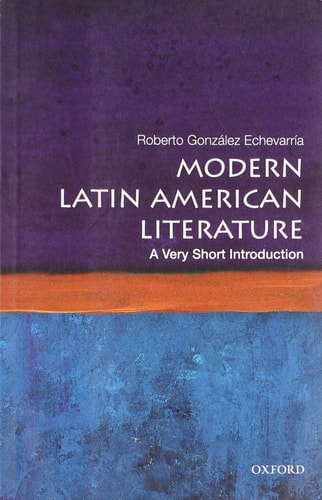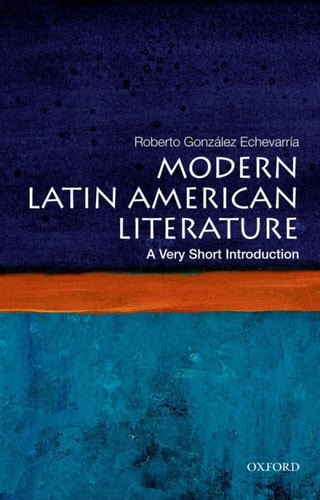
Modern Latin American Literature: A Very Short Introduction
0
0
As an Amazon Associate and affiliate partner, Menrva Books earns from qualifying purchases. Learn more
Author Description
This Very Short Introduction chronicles the trends and traditions of modern Latin American literature, arguing that Latin American literature developed as a continent-wide phenomenon, not just an assemblage of national literatures, in moments of political crisis. With the Spanish American War came Modernismo, the end of World War I and the Mexican Revolution produced the avant-garde, and the Cuban Revolution sparked a movement in the novel that came to be known as the Boom. Within this narrative, the author covers all of the major writers of Latin American literature, from Andrés Bello and José María de Heredia, through Borges and García Márquez, to Fernando Vallejo and Roberto Bolaño.
Menrva's Summary
THE THESIS
This book investigates the development of modern Latin American literature as a unified, continent-wide phenomenon rather than a collection of isolated national traditions. Roberto Gonzalez Echevarria, a prominent scholar in the field, utilizes historical context to argue that major literary movements emerged in direct response to moments of intense political crisis. By mapping the evolution of the novel and poetry against events like the Mexican Revolution and the Cuban Revolution, the author provides a cohesive framework for understanding the region's literary output.
THE SCOPE MAP
What You Will Find
- Analysis of major literary movements including Modernismo, the avant-garde, and the Boom.
- Historical correlation between political upheaval and artistic production.
- Examination of foundational authors ranging from Andrés Bello to Roberto Bolaño.
- A synthesis of Latin American literature as a singular, interconnected cultural entity.
THE AUTHORITY PERSPECTIVE
Experts recognize this text as a concise and authoritative overview suitable for students and general readers seeking a structured introduction to the field. Readers frequently note the clarity of the prose and the author's ability to distill complex historical and literary trends into a manageable format.
Page Count:
150
Publication Date:
2012-01-01
Publisher:
Oxford University Press
ISBN-10:
0199912963
ISBN-13:
9780199912964
Non-Fiction
History
English & College Success
Latin American
English
Literary Criticism