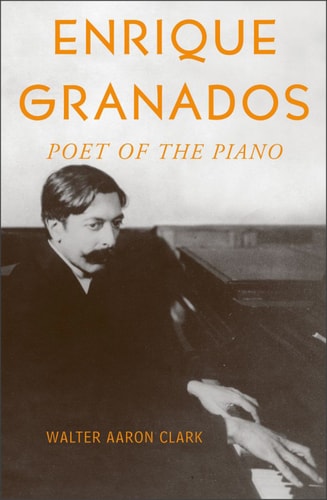
Enrique Granados: Poet of the Piano
0
0
As an Amazon Associate and affiliate partner, Menrva Books earns from qualifying purchases. Learn more
Author Description
Enrique Granados (1867-1916) is one of the most compelling figures of the late-Romantic period in music. During his return voyage to Spain after the premiere of his opera Goyescas at New York's Metropolitan Opera in 1916, a German submarine torpedoed the ship on which he and his wife were sailing, and they perished in the waters of the English Channel. His death was mourned on both sides of the Atlantic as a stunning loss to the music world, for he had died at the pinnacle of his career, and his late works held the promise of greater things to come. Granados was among the leading pianists of his time, and his eloquence at the keyboard inspired critics to dub him the "poet of the piano." In Enrique Granados: Poet of the Piano, Walter Aaron Clark offers the first substantive study in English of this virtuoso pianist, composer, and music pedagogue. While providing detailed analyses of his major works for voice, piano, and the stage, Clark argues that Granados's art represented a unifying presence on the cultural landscape of Spain during a period of imperial decline, political unrest, and economic transformation. Drawing on newly discovered documents, Clark explores the cultural spheres in which Granados moved, particularly of Castile and Catalonia. Granados's best-known music was inspired by the art of Francisco Goya, especially the Goyescas suite for solo piano that became the basis for the opera. These pieces evoked the colorful and dramatic world that Goya inhabited and depicted in his art. Granados's fascination with Goya's Madrid set him apart from fellow nationalists Albéniz and Falla, who drew their principal inspiration from Andalusia. Though he was resolutely apolitical, Granados's attraction to Castile antagonized some Catalan nationalists, who resented Castilian domination. Yet Granados also made important contributions to Catalan musical theater and was a prominent figure in the modernist movement in Barcelona. Clark also explores the personal pressures th
Menrva's Summary
THE THESIS
This biography investigates the life and artistic legacy of Enrique Granados, questioning how his compositions functioned as a unifying cultural force during a period of significant Spanish political and economic instability. Walter Aaron Clark, a scholar of music history, utilizes newly discovered archival documents to reconstruct the professional and personal trajectory of the composer. The text argues that Granados's unique aesthetic, rooted in the art of Francisco Goya, distinguished him from his contemporaries and solidified his role as a pivotal figure in the late-Romantic musical landscape.
THE SCOPE MAP
What You Will Find
- Detailed musicological analysis of major works for piano, voice, and stage.
- Historical context regarding the cultural spheres of Castile and Catalonia during the late 19th and early 20th centuries.
- Examination of the influence of Francisco Goya on Granados's creative output.
- Biographical data concerning the composer's career, pedagogical contributions, and tragic death in 1916.
THE AUTHORITY PERSPECTIVE
Scholars and music historians recognize this work as the definitive English-language study of the composer. Readers frequently note the meticulous research and the author's ability to balance technical musical analysis with broader historical narrative.
Page Count:
304
Publication Date:
2005-01-01
Publisher:
Oxford University Press
ISBN-10:
0199910529
ISBN-13:
9780199910526
History
Music
Biography
Biography Autobiography
English
Piano
Musicology
English & College Success
Composers
Music History
Humanities
Composers spain
Community Tags
Other Editions(2)
Similar Books






Reader Comments
Share Your Thoughts
No comments yet. Be the first to share your thoughts!