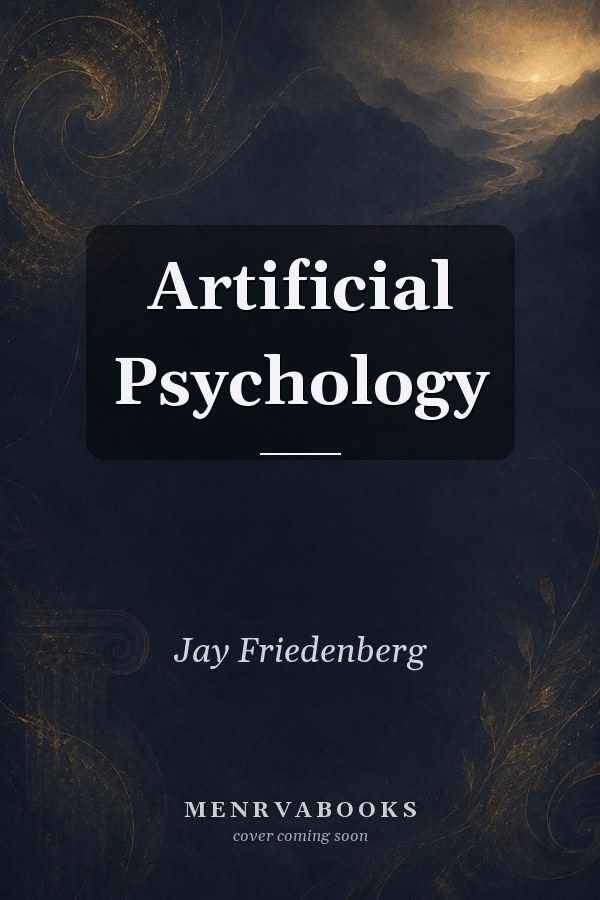
Artificial Psychology
0
0
As an Amazon Associate and affiliate partner, Menrva Books earns from qualifying purchases. Learn more
Author Description
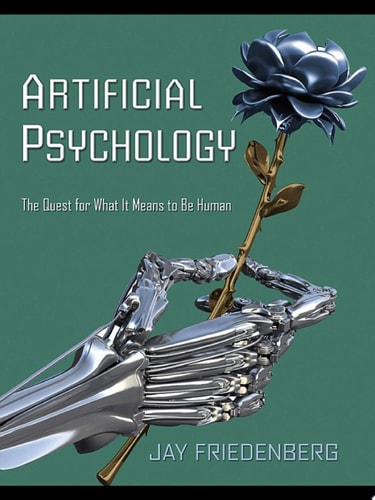
Is it possible to construct an artificial person? Researchers in the field of artificial intelligence have for decades been developing computer programs that emulate human intelligence. This book goes beyond intelligence and describes how close we are to recreating many of the other capacities that make us human. These abilities include learning, creativity, consciousness, and emotion. The attempt to understand and engineer these abilities constitutes the new interdisciplinary field of artificial psychology, which is characterized by contributions from philosophy, cognitive psychology, neuroscience, computer science, and robotics. This work is intended for use as a main or supplementary introductory textbook for a course in cognitive psychology, cognitive science, artificial intelligence, or the philosophy of mind. It examines human abilities as operating requirements that an artificial person must have and analyzes them from a multidisciplinary approach. The book is comprehensive in scope, covering traditional topics like perception, memory, and problem solving. However, it also describes recent advances in the study of free will, ethical behavior, affective architectures, social robots, and hybrid human-machine societies.
Menrva's Summary
THE THESIS
This book investigates the feasibility of constructing an artificial person by examining the human capacities required for such an entity. Jay Friedenberg draws upon his background in cognitive psychology to synthesize research from philosophy, neuroscience, and computer science. He argues that by treating human cognitive and emotional traits as engineering requirements, researchers can better understand the potential for creating machines that possess consciousness, creativity, and ethical agency.
THE SCOPE MAP
What You Will Find
- Comprehensive analysis of traditional cognitive functions including perception, memory, and problem solving.
- Examination of complex human traits such as free will, consciousness, and emotional architecture.
- Multidisciplinary framework integrating robotics, cognitive science, and the philosophy of mind.
- Discussion of the societal implications of hybrid human-machine interactions and ethical behavior in artificial agents.
THE AUTHORITY PERSPECTIVE
Experts identify this work as a foundational textbook for students entering the fields of cognitive science and artificial intelligence. Readers frequently note the accessible yet rigorous academic density of the prose, which effectively bridges the gap between theoretical philosophy and practical engineering.
Page Count:
312
Publication Date:
2010-01-01
Publisher:
Taylor & Francis Group
ISBN-10:
0203837916
ISBN-13:
9780203837917
Philosophy
Cognitive Psychology
Computer Science
Neuroscience
Robotics
Educational statistics
Psychometrics