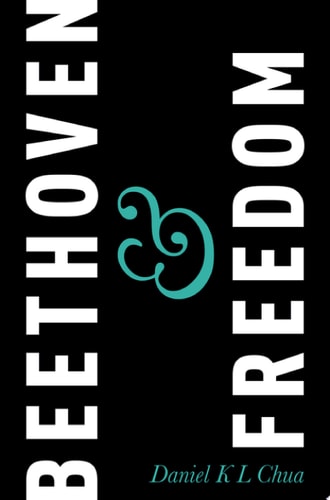
Beethoven & Freedom
0
0
As an Amazon Associate and affiliate partner, Menrva Books earns from qualifying purchases. Learn more
Author Description
Over the last two centuries, Beethoven's music has been synonymous with the idea of freedom, in particular a freedom embodied in the heroic figure of Prometheus. This image arises from a relatively small circle of heroic works from the composer's middle period, most notably the Eroica Symphony. However, the freedom associated with the Promethean hero has also come under considerably critique by philosophers, theologians and political theorists; its promise of autonomy easily inverts into various forms of authoritarianism, and the sovereign will it champions is not merely a liberating force but a discriminatory one. Beethoven's freedom, then, appears to be increasingly problematic; yet his music is still employed today to mark political events from the fall of the Berlin Wall to the attacks of 9/11. Even more problematic, perhaps, is the fact that this freedom has shaped the reception of Beethoven music to such an extent that we forget that there is another kind of music in his oeuvre that is not heroic, a music that opens the possibility of a freedom yet to be articulated or defined. By exploring the musical philosophy of Theodor W. Adorno through a wide range of the composer's music, Beethoven and Freedom arrives at a markedly different vision of freedom. Author Daniel KL Chua suggests that a more human and fragile concept of freedom can be found in the music that has less to do with the autonomy of the will and its stoical corollary than with questions of human relation, donation, and a yielding to radical alterity. Chua's work makes a major and controversial statement by challenging the current image of Beethoven, and by suggesting an alterior freedom that can speak ethically to the twenty-first century.
Menrva's Summary
THE THESIS
This book investigates the problematic association between Beethoven’s music and the concept of heroic freedom, proposing an alternative interpretation rooted in human relation and radical alterity. Daniel K. L. Chua, a scholar of musicology, utilizes the philosophical framework of Theodor W. Adorno to re-examine the composer's oeuvre. By moving beyond the traditional focus on the heroic middle period, the author argues that a more fragile, ethical form of freedom exists within Beethoven's less celebrated works. This study challenges the long-standing narrative of the sovereign, autonomous will in favor of a model centered on donation and connection.
THE SCOPE MAP
What You Will Find
- Analysis of Beethoven's middle-period heroic works versus his later, non-heroic compositions
- Application of Theodor W. Adorno’s musical philosophy to specific scores
- Examination of the political and cultural reception of Beethoven's music across two centuries
- Theoretical exploration of autonomy, authoritarianism, and human relation in music
Scope Limits
- Does not provide a comprehensive biography of the composer
- Does not focus on technical music theory or performance practice
THE AUTHORITY PERSPECTIVE
Scholars and critics recognize this work as a significant intervention in Beethoven studies that successfully complicates the standard heroic narrative. Readers frequently note the academic density of the prose, which requires a strong background in both musicology and continental philosophy to fully grasp.
Page Count:
287
Publication Date:
2017-01-01
Publisher:
Oxford University Press
ISBN-10:
0190657243
ISBN-13:
9780190657246
Philosophy
Cultural History
Political Theory
Musicology
Humanities
Community Tags
Similar Books