Tragedy's Endurance
0
0
As an Amazon Associate and affiliate partner, Menrva Books earns from qualifying purchases. Learn more
Author Description
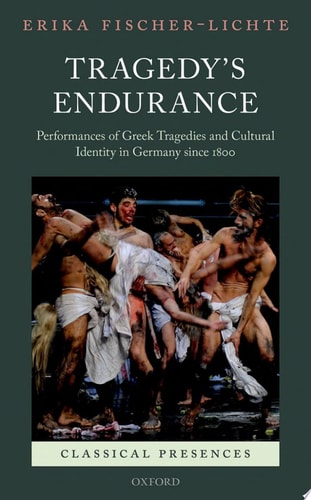
This Volume Sets Out A Novel Approach To Theatre Historiography, Presenting The History Of Performances Of Greek Tragedies In Germany Since 1800 As The History Of The Evolving Cultural Identity Of The Educated Middle Class Throughout That Period. Philhellenism And Theatromania Took Hold In This Milieu Amidst Attempts To Banish The Heavily French-influenced German Court Culture Of The Mid-eighteenth Century, And By 1800 Performances Of Greek Tragedies Had Effectively Become The German Answer To The French Revolution. Tragedy's Subsequent Endurance On The German Stage Is Mapped Here Through The Responses Of Performances To Particular Political, Social, And Cultural Milestones, From The Napoleonic Wars And The Revolution Of 1848 To The Third Reich, The New Political Movements Of The 1960s And 1970s, And The Fall Of The Berlin Wall And Reunification. Images Of Ancient Greece Which Were Prevalent In The Productions Of These Different Eras Are Examined Closely: The Nazi's Proclamation Of A Racial Kinship Between The Greeks And The Germans; The Politicization Of Performances Of Greek Tragedies Since The 1960s And 1970s, Emblematized By Marcuse's Notion Of A Cultural Revolution; The Protest Choruses Of The Gdr And The Subsequent New Genre Of Choric Theatre In Unified Germany. By Examining These Images And Performances In Relation To Their Respective Socio-cultural Contexts, The Volume Sheds Light On How, In A Constantly Changing Political And Cultural Climate, Performances Of Greek Tragedies Helped Affirm, Destabilize, Re-stabilize, And Transform The Cultural Identity Of The Educated Middle Class Over A Volatile Two Hundred Year Period.
Menrva's Summary
THE THESIS
This volume investigates how the performance of Greek tragedies in Germany since 1800 served as a primary mechanism for constructing and evolving the cultural identity of the educated middle class. Erika Fischer-Lichte, a prominent scholar in theatre and performance studies, utilizes a historiographical framework to analyze the intersection of aesthetic production and socio-political shifts. By examining two centuries of theatrical output, the author argues that these performances functioned as a mirror for German self-perception during periods of significant national upheaval.
THE SCOPE MAP
What You Will Find
- Analysis of Greek tragedy performances from 1800 to the post-reunification era.
- Examination of the relationship between Philhellenism and German middle-class identity.
- Case studies on the politicization of theatre during the Third Reich, the 1960s, and the GDR.
- Investigation of evolving visual and thematic representations of Ancient Greece.
Scope Limits
- The text focuses specifically on the German theatrical tradition and does not provide a comprehensive global history of Greek tragedy performance.
- It prioritizes the perspective of the educated middle class, potentially overlooking broader popular culture reception.
THE AUTHORITY PERSPECTIVE
Scholars and theatre historians frequently cite this work as a foundational text for understanding the intersection of classical reception and national identity. Readers often note the academic density of the prose, which requires a strong background in German history and performance theory to fully appreciate the author's arguments.
Page Count:
480
Publication Date:
2017-01-01
Publisher:
Oxford University Press
ISBN-10:
0191057878
ISBN-13:
9780191057878
History
German history
Theatre studies
Performance theory
Community Tags
Other Editions(2)

Similar Books