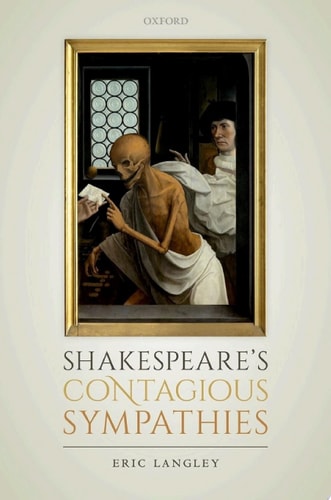
Shakespeare's Contagious Sympathies: Ill Communications
0
0
As an Amazon Associate and affiliate partner, Menrva Books earns from qualifying purchases. Learn more
Author Description
Understanding the early-modern subject to be constituted, as Shakespeare's Ulysses explains, by its communications with others, this study considers what happens when these conceptions of compassionate communication and sympathetic exchange are comprehensively undermined by period anxieties concerning contagion and the transmission of disease. Allowing that 'no man is... any thing' until he has 'communicate[d] his parts to others', can these formative communications still be risked in a world preoccupied by communicable sickness, where every contact risks contraction, where every touch could be the touch of plague, where kind interaction could facilitate cruel infection, and where to commiserate is to risk 'miserable dependence'? Counting the cost of compassion, this study of Shakespeare's plays and poetry analyses how medical explanations of disease impact upon philosophical conceptions and literary depictions of his characters who find themselves precariously implicated within a world of ill communications. It examines the influence of scientific thought upon the history of the subject, and explores how Shakespeare—alive to both the importance and dangers of sympathetic communication—articulates an increasing sense of both the pragmatic benefits of monadic thought, emotional isolation, and subjective quarantine, while offering his account of the considerable loss involved when we lose faith in vulnerable, tender, and open existence.
Menrva's Summary
THE THESIS
This study investigates how early modern anxieties regarding contagion and disease transmission fundamentally challenged and reshaped Shakespearean conceptions of human sympathy and interpersonal communication. Eric Langley, a scholar of early modern literature, utilizes a synthesis of medical history, philosophical inquiry, and close textual analysis of Shakespeare’s canon to argue that the period’s preoccupation with plague forced a re-evaluation of the risks inherent in human connection. The work posits that Shakespeare’s characters navigate a tension between the necessity of social interaction for self-definition and the existential threat posed by physical and emotional contagion.
THE SCOPE MAP
What You Will Find
- Analysis of Shakespearean plays and poetry through the lens of early modern medical theory.
- Examination of the philosophical shift from communal identity to monadic isolation.
- Exploration of the metaphoric and literal intersections of 'communication' and 'infection'.
Scope Limits
- The study does not provide a comprehensive history of all early modern medical practices.
- It does not focus on contemporary post-modern interpretations of contagion outside the early modern context.
THE AUTHORITY PERSPECTIVE
Scholars and critics recognize this work as a rigorous contribution to the medical humanities and Shakespearean studies. Readers frequently note the academic density of the prose and the depth of the historical research provided by the author.
Page Count:
332
Publication Date:
2018-01-01
Publisher:
OUP Oxford
ISBN-10:
0192554921
ISBN-13:
9780192554925
Philosophy
Cultural History
Humanities
History - Modern
Special Topics
Theatre
Literary Criticism
Community Tags
Similar Books