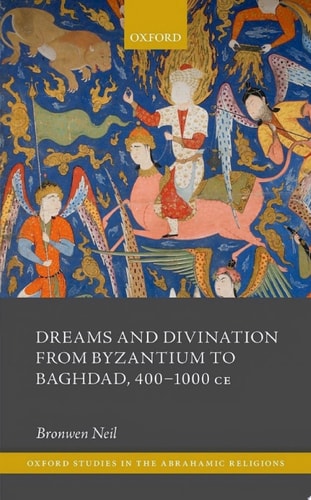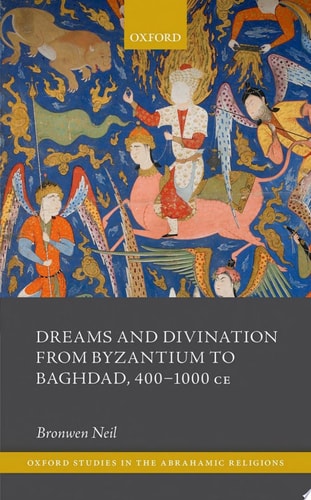
Dreams and Divination from Byzantium to Baghdad, 400-1000 CE
0
0
As an Amazon Associate and affiliate partner, Menrva Books earns from qualifying purchases. Learn more
Author Description
Why did dreams matter to Jews, Byzantine Christians, and Muslims in the first millennium? Dreams and Divination from Byzantium to Baghdad, 400-1000 CE shows how the ability to interpret dreams universally attracted power and influence in the first millennium. In a time when prophetic dreams were viewed as God's intervention in human history, male and female prophets wielded unparalleled power in imperial courts, military camps, and religious gatherings. The three faiths drew on the ancient Near Eastern tradition of dream key manuals, which offer an insight into the hopes and fears of ordinary people. They melded pagan dream divination with their own scriptural traditions to produce a novel and rich culture of dream interpretation. Prophetic dreams enabled communities to understand their past and present circumstances as divinely ordained and helped to bolster the spiritual authority of dreamers and those who had the gift of interpreting their dreams. Bronwen Neil takes a gendered approach to the analysis of the common culture of dream interpretation across late antique Jewish, Byzantine, and Islamic sources to 1000 CE, in order to expose the ways in which dreams offered women a unique opportunity to exercise influence. The epilogue to the volume reveals why dreams still matter today to many men and women of the monotheist traditions.
Menrva's Summary
THE THESIS
This work investigates how the interpretation of dreams functioned as a mechanism for social and political power within Jewish, Byzantine, and Islamic societies during the first millennium. Bronwen Neil, a scholar specializing in late antiquity and Byzantine history, utilizes a comparative framework to analyze how these three monotheistic traditions integrated ancient Near Eastern dream-manual traditions with their own theological structures. By examining primary sources from imperial courts to religious gatherings, the author argues that dream interpretation served as a vital tool for legitimizing authority and navigating historical crises.
THE SCOPE MAP
What You Will Find
- Comparative analysis of Jewish, Byzantine, and Islamic dream-interpretation practices.
- Examination of the influence of ancient Near Eastern dream-key manuals on medieval religious thought.
- A gendered analysis focusing on how women utilized dream interpretation to exert influence in patriarchal structures.
- Historical context regarding the role of prophetic dreams in military and imperial decision-making.
Scope Limits
- The analysis is strictly bounded by the period between 400 and 1000 CE.
- The study does not extend to non-monotheistic traditions outside the specified geographic and cultural spheres.
THE AUTHORITY PERSPECTIVE
Scholars recognize this text as a significant contribution to the study of late antique religious culture and the intersection of gender and authority. Readers frequently note the academic rigor of the prose and the author's success in synthesizing disparate religious traditions into a cohesive historical narrative.
Page Count:
304
Publication Date:
2021-01-01
Publisher:
Oxford University Press
ISBN-10:
0192644521
ISBN-13:
9780192644527
History
Divination
Gender Studies
Cultural History