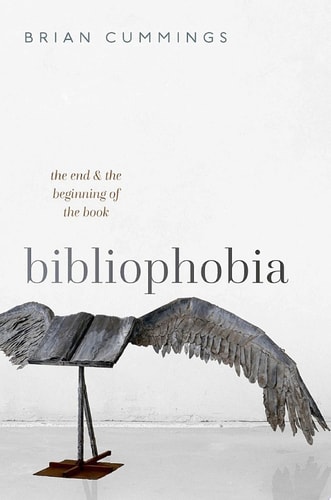
Bibliophobia: The End and the Beginning of the Book
0
0
As an Amazon Associate and affiliate partner, Menrva Books earns from qualifying purchases. Learn more
Author Description
Bibliophobia is a book about material books, how they are cared for, and how they are damaged, throughout the 5000-year history of writing from Sumeria to the smartphone. Its starting point is the contemporary idea of 'the death of the book' implied by the replacement of physical books by digital media, with accompanying twenty-first-century experiences of paranoia and literary apocalypse. It traces a twin fear of omniscience and oblivion back to the origins of writing in ancient Babylon and Egypt, then forwards to the age of Google. It uncovers bibliophobia from the first Chinese emperor to Nazi Germany, alongside parallel stories of bibliomania and bibliolatry in world religions and literatures. Books imply cognitive content embodied in physical form, in which the body cooperates with the brain. At its heart this relationship of body and mind, or letter and spirit, always retains a mystery. Religions are founded on holy books, which are also sites of transgression, so that writing is simultaneously sacred and profane. In secular societies these complex feelings are transferred to concepts of ideology and toleration. In the ambiguous future of the internet, digital immateriality threatens human equilibrium once again. Bibliophobia is a global history, covering six continents and seven religions, describing written examples from each of the last thirty centuries (and several earlier). It discusses topics such as the origins of different kinds of human script; the development of textual media such as scrolls, codices, printed books, and artificial intelligence; the collection and destruction of libraries; the use of books as holy relics, talismans, or shrines; and the place of literacy in the history of slavery, heresy, blasphemy, censorship, and persecution. It proposes a theory of writing, how it relates to speech, images, and information, or to concepts of mimesis, personhood, and politics. Originating as the Clarendon Lectures in the Faculty of English at the Uni
Menrva's Summary
THE THESIS
This work investigates the historical and psychological roots of the fear of books, examining why the physical object of the book has consistently triggered anxieties regarding knowledge, power, and human identity. Brian B. Cummings, a professor of English, utilizes a vast historical framework spanning 5,000 years to argue that the tension between the physical book and its cognitive content is a fundamental aspect of human civilization. By analyzing the transition from ancient scrolls to digital media, he posits that the current 'death of the book' narrative is merely the latest iteration of a long-standing human struggle with the permanence and vulnerability of written records.
THE SCOPE MAP
What You Will Find
- A comprehensive history of writing media including scrolls, codices, and digital formats.
- Analysis of the intersection between bibliophobia, bibliomania, and bibliolatry across seven world religions.
- Examination of the role of literacy in historical contexts of slavery, censorship, and political persecution.
- Theoretical exploration of the relationship between speech, images, and information.
Scope Limits
- The text does not provide a technical manual for digital preservation or archival science.
- It does not offer a predictive model for the future of the publishing industry.
THE AUTHORITY PERSPECTIVE
Scholars and critics recognize this text as a significant contribution to the history of the book, noting its impressive breadth and interdisciplinary approach. Readers frequently highlight the academic density of the prose, which synthesizes complex historical data with philosophical inquiry into the nature of human cognition.
Page Count:
586
Publication Date:
2022-01-01
Publisher:
OUP Oxford
ISBN-10:
0192663097
ISBN-13:
9780192663092
History
Philosophy
Non-Fiction
English & College Success
English
Media Studies
Literary Criticism
Community Tags
Other Editions(3)

Similar Books











Reader Comments
Share Your Thoughts
No comments yet. Be the first to share your thoughts!