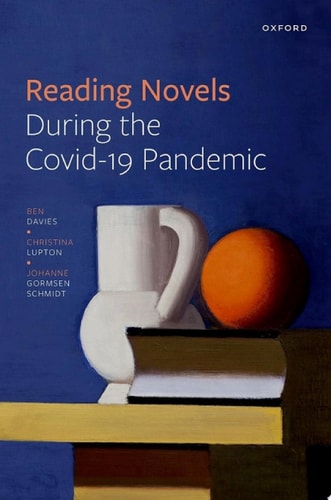
Reading Novels During the Covid-19 Pandemic
0
0
As an Amazon Associate and affiliate partner, Menrva Books earns from qualifying purchases. Learn more
Author Description
Drawing on an ethnographic study of novel readers in Denmark and the UK during the Covid-19 pandemic, this book provides a snapshot of a phenomenal moment in modern history. The ethnographic approach shows what no historical account of books published during the pandemic will be able to capture, namely the movement of readers between new purchases and books long kept in their collections. The book follows readers who have tuned into novels about plague, apocalypse, and racial violence, but also readers whose taste for older novels, and for re-reading novels they knew earlier in their lives, has grown. Alternating between chapters that analyse single texts that were popular (Albert Camus's The Plague, Ali Smith's Summer, Charlotte Brönte's Jane Eyre) and others that describe clusters of, for example, dystopian fiction and nature writing, this work brings out the diverse quality of the Covid-19 bookshelf.Time is of central importance to this study, both in terms of the time of lockdown and the temporality of reading itself within this wider disrupted sense of time. By exploring these varied experiences, this book investigates the larger question of how the consumption of novels depends on and shapes people's experience of non-work time, providing a specific lens through which to examine the phenomenology of reading more generally.This timely work also negotiates debates in the study of reading that distinguish theoretically between critical reading and reading for pleasure, between professional and lay reading. All sides of the sociological and literary debate must be brought to bear in understanding what readers tell us about what novels have meant to them in this complex historical moment.
Menrva's Summary
THE THESIS
How did the experience of the Covid-19 pandemic alter the consumption, selection, and temporal relationship between readers and their novels? Authors Ben Davies, Christina Lupton, and Johanne Gormsen Schmidt utilize an ethnographic framework to analyze the reading habits of individuals in Denmark and the UK during lockdown periods. By synthesizing qualitative data from reader interviews with literary analysis of popular texts, the authors argue that reading during this period functioned as a mechanism for navigating disrupted time and personal isolation. The study bridges the gap between professional literary criticism and the lived reality of lay readers, offering a phenomenological account of how literature interacts with historical crisis.
THE SCOPE MAP
What You Will Find
- Ethnographic data from reader cohorts in Denmark and the UK.
- Comparative analysis of contemporary fiction and classic literature.
- Theoretical frameworks regarding the temporality of reading and non-work time.
- Case studies on specific texts including The Plague, Summer, and Jane Eyre.
Scope Limits
- The study is geographically limited to Denmark and the UK.
- It does not provide a comprehensive global survey of pandemic-era reading habits.
THE AUTHORITY PERSPECTIVE
Scholars in the field of book history and sociology recognize this work as a significant contribution to the study of reader reception during periods of social upheaval. Experts note that the text successfully balances rigorous academic inquiry with a nuanced understanding of the subjective experience of reading for pleasure.
Page Count:
213
Publication Date:
2022-01-01
Publisher:
OUP Oxford
ISBN-10:
0192672177
ISBN-13:
9780192672179
History
English
Reading research
Literary Criticism
Sociology
English & College Success
Community Tags
Other Editions(3)

Similar Books


Reader Comments
Share Your Thoughts
No comments yet. Be the first to share your thoughts!