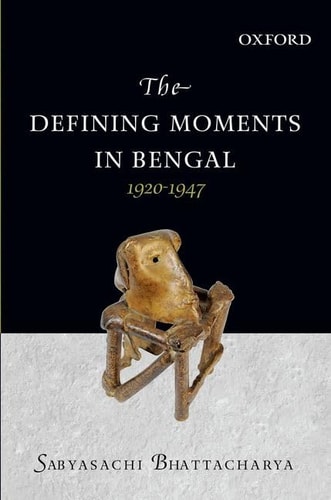
The Defining Moments in Bengal
0
0
As an Amazon Associate and affiliate partner, Menrva Books earns from qualifying purchases. Learn more
Author Description
This work explores the early twentieth-century trends which shaped the life and mind of Bengal for decades later. Bengal as we know it today emerged in the years between the 1920s and the twin events of Independence and Partition in 1947. It is one of the arguments in this book that in the twenties there began a redefinition of Bengal's identity that distinguishes twentieth-century Bengal from the past, the era of the 'Renaissance' and its climactic moment, the movement against the Partition of Bengal.In the 1920s there were signs of a new 'Bengali Patriotism' of the bhadralok elite. At the same time, there emerges a new bhadra-mahila, with a critique of conventional notions like chastity, and along with it the entry of women in politics and the public sphere. As for the so-called lower castes and the Muslim community, the fault-lines in the old social order are increasingly manifested in the discourse of Muslim identity in Bengali journals. This work argues that the activities of political parties were only an external manifestation of the root cause, a deep-seated division that appeared in quotidian life and social exclusion. As regards politics, the keynote is Bengal's engagement in Gandhian politics along with a contrarian search for alternatives to the Gandhian path, for example, the Swarajya party, biplabi or revolutionary nationalism, and the Left as an alternative to Gandhism. The 1940s witnessed a series of crises: price inflation during World War II, corruption in public life, the great famine (1943), and finally the communal riot in Calcutta (1946) signalling an irreparable rupture between two communities. The book concludes with a depiction of the political process leading to independence and the second partition of Bengal. That was the outcome of the decades-long negotiation between regional patriotism and an overarching Indian nationalism.
Menrva's Summary
THE THESIS
This work investigates the transformative socio-political shifts in Bengal between the 1920s and the 1947 Partition that redefined the region's identity. Sabyasachi Bhattacharya, a distinguished historian of modern India, utilizes a combination of archival research and socio-cultural analysis to argue that the period's political upheavals were symptoms of deeper, structural changes in daily life. He examines the evolution of the bhadralok elite, the changing role of women, and the widening communal fault-lines that ultimately dictated the trajectory of regional and national politics.
THE SCOPE MAP
What You Will Find
- Analysis of the 1920s as a foundational decade for modern Bengali identity.
- Examination of the emergence of the bhadra-mahila and the shifting status of women in the public sphere.
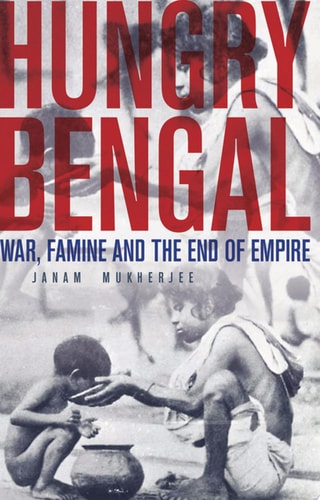
- Historical assessment of the 1943 famine, World War II inflation, and the 1946 Calcutta riots.
- Evaluation of political alternatives to Gandhism, including the Swarajya party and revolutionary nationalism.
THE AUTHORITY PERSPECTIVE
Scholars recognize this text as a rigorous examination of the complex interplay between regional patriotism and Indian nationalism. Readers frequently note the academic density of the prose, which provides a comprehensive framework for understanding the irreparable ruptures of the 1940s.
Page Count:
419
Publication Date:
2014-08-01
Publisher:
Oxford University Press
ISBN-10:
0198098944
ISBN-13:
9780198098942
History
Social History
India
Bengal India
Asian History
Community Tags
Similar Books